
Last updated November 18, 2026

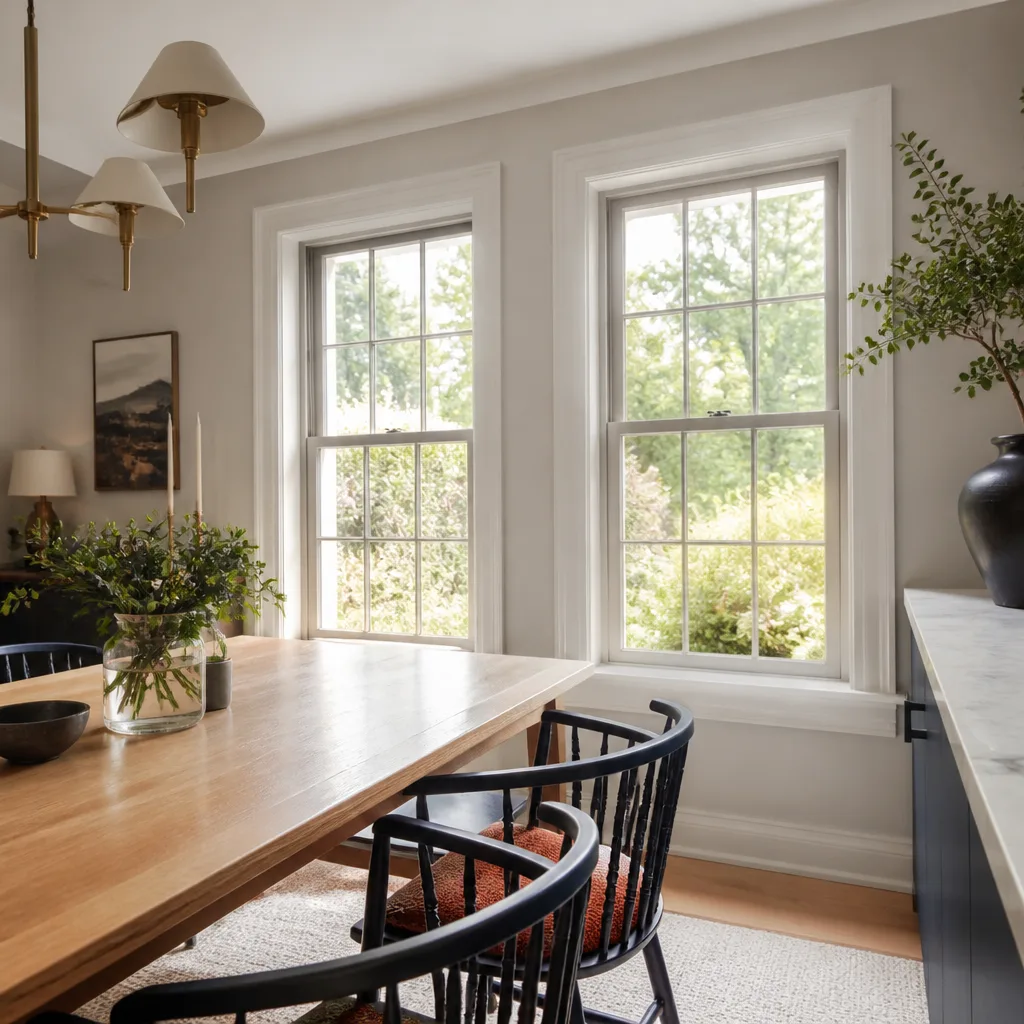






Free written scope consultation - allowances, timeline, and change-order rules on paper before a single trade is scheduled
How to Hire a Construction Contractor in Mission Viejo: A Step-by-Step Guide
Most homeowners start their contractor search with the CSLB license lookup, and that’s a good instinct. It’s also where the process usually stalls. A license number tells you a contractor is legally allowed to work in California. It tells you nothing about whether they’ve pulled a permit through the City of Mission Viejo, sat through a Covenant Hills architectural committee review, or run a three-trade remodel in an occupied house without the family eating takeout for four months. This guide is about the gap between legal and right for your particular job. You’ll learn how to read a bid, what to ask a Mission Viejo contractor before you sign, and how to build a timeline that accounts for the inspections and approvals nobody mentions in the sales pitch.
Quick Answer
Hiring a construction contractor in Mission Viejo means verifying the CSLB license class against your project’s scope, then vetting for local experience the state doesn’t track: permit history with the City of Mission Viejo, HOA approval experience in planned communities like Covenant Hills, and a stable subcontractor roster. Compare at least three itemized bids, check that allowances reflect real material costs, and refuse any payment schedule that front-loads more than a modest deposit before work begins.
Styles & brands we work with
- Kitchen remodeling
- Bathroom remodeling
- Home additions & ADU
- Roofing
- Windows & doors
- Driveway & pavers
- Fence
Table of Contents
- License Class Matters More Than You Think
- The Mission Viejo Vetting Questions Nobody Asks
- How to Read a Bid Apples-to-Apples
- Red Flags in California Residential Contracts
- Why Multi-Trade Projects Need One Accountable Contractor
- What a Realistic Timeline Looks Like in Mission Viejo
- Building a Payment Schedule That Protects You
- The Step-by-Step Hiring Process
License Class Matters More Than You Think
California separates contractors into license classes, and the difference between them is the single most overlooked detail in a homeowner’s search. A C-39 roofing license lets a contractor install your roof. It does not let them frame an addition, run new electrical, or manage a kitchen remodel that touches plumbing, gas, and structural walls. Those require a B license, the general building contractor classification. When your project crosses trade lines, you need a B license holder running the job, not a specialist who’s subcontracting outside their class and hoping nobody checks.
Here’s the practical test. Ask what license class the contractor holds and match it to your scope:
- Single-trade work (roof only, fence only, driveway only) can sit with a licensed specialty contractor in that trade.
- Anything touching two or more trades needs a B general building contractor.
- Structural changes, additions, or ADUs should always be a B license, because structural work is core general contracting.
Mission Viejo’s older single-family tracts have seen a lot of piecemeal upgrades over the years, and a house that’s had a patio cover added, a bathroom reconfigured, and a kitchen partially updated is exactly the situation where a specialty contractor’s scope quietly runs out. If you’re planning a project that touches more than one trade, a full-scope contractor keeps the work under one license and one point of accountability. That’s the model behind the Construction Mission Viejo approach to residential work: one contractor from the driveway to the roofline, no handoff between trades.
The Mission Viejo Vetting Questions Nobody Asks
The CSLB lookup is step one. Step two is asking questions that no state database can answer. In our experience, most homeowners never get past the license number, and that’s where preventable problems start. These questions sort a contractor who knows Mission Viejo from one who’s passing through.
- “Have you pulled permits through the City of Mission Viejo’s building department? Can you name the projects?” A contractor who works here regularly knows the city’s permit counter, its plan review process, and the inspection sequence. One who’s never pulled a permit here will learn on your dime.
- “Have you worked with HOA architectural committees in this area?” Large portions of Mission Viejo sit inside planned communities with architectural review requirements. Covenant Hills is the best-known example, but the review process applies broadly across the city’s HOAs. A contractor who has never submitted to an architectural committee will underestimate your timeline by weeks.
- “Who are your subs, and how long have they worked with you?” Stable rosters signal a contractor who can actually get their electrician and plumber to show up. A rotating cast of unfamiliar subs shows up later as a schedule you can’t hold anyone to.
- “What’s your approach when a city inspector flags something?” The answer should be a specific process for correction and re-inspection, not a shrug.
- “Can I see a sample line-item bid before I commit?” Refusing to show bid structure is a warning sign.
Ask these before pricing comes up. The answers tell you whether the contractor’s local knowledge is real. A contractor who can describe the permit workflow and the HOA submission process in plain terms has done it. One who deflects hasn’t.
How to Read a Bid Apples-to-Apples
Three bids for the “same” project often describe three different houses. One contractor priced a builder-grade vanity, another priced a semi-custom, and the third left cabinetry out entirely because it’s “by owner.” The totals look comparable and the scope doesn’t. The way out is a line-item bid you can actually read, compared item by item. Here’s where the corners get cut:
- Allowances. A $2,000 cabinet allowance in a 2026 kitchen covers almost nothing at retail. Any allowance should reflect a real material tier. If a bid names KraftMaid or Wellborn as the cabinet line, ask which series and confirm the allowance covers it.
- Material by brand and model. “Quartz countertops” means nothing on its own. Cambria and Silestone are different products at different price points. A bid that says “quartz” without a brand is a bid that reserves the right to pick whatever is cheapest.
- Labor exclusions. Drywall patching, paint touch-up, and haul-away appear as exclusions in more bids than you’d expect. Read the “not included” list as carefully as the scope list.
- Permit line. Either the contractor is pulling permits or they aren’t. There’s no middle. A bid that leaves permits to the homeowner is a bid that expects you to manage the city.
- Subcontractor costs. Electrical, plumbing, and HVAC should show as line items, not disappear into a “miscellaneous” number.
When the bids share a brand and tier across line items, you’re comparing the same job. When they don’t, you’re comparing marketing. We bring the options across a documented roster of 50+ manufacturer brands and let homeowners make the call, which is why our line items can be compared against anybody else’s. A bid you can read is a bid you can trust.
Red Flags in California Residential Contracts
California’s contract rules exist to protect homeowners, and the contractors who skirt them do so in predictable ways. Watch for these:
- Open-ended allowances with no reconciliation clause. An allowance that can balloon without documentation and without your sign-off is a blank check. The contract should say how overages get approved.
- Vague scope language. “Remodel kitchen as discussed” is not a scope. It’s a void the contractor fills in later. Every room, every fixture, every finish should be specified.
- A payment schedule front-loaded onto you. Large deposits before work begins shift the contractor’s financial risk onto your checkbook. A reasonable deposit with payments tied to completed stages is standard.
- No written change order process. Changes happen on every job. The question is whether changes get priced, documented, and signed before the work happens or after.
- No lien disclosure or preliminary notice discussion. In California, subcontractors and suppliers can file liens. A professional contractor addresses this up front.
- A three-day right-to-cancel not mentioned. California gives homeowners a cancellation window on many home improvement contracts; a contractor who glosses over it either doesn’t know the law or hopes you don’t.
None of these red flags require a lawyer to spot. They require reading the contract carefully and asking what each clause means before you sign. A good contractor welcomes the questions. A defensive one tells you something.
Why Multi-Trade Projects Need One Accountable Contractor
A kitchen remodel touches cabinetry, countertops, electrical, plumbing, and often structural walls. A home addition touches all of that plus framing, roofing, windows, and exterior finishing. When three specialty contractors each handle their own piece, the seams between their work are where problems live: the electrician blames the framer, the framer blames the cabinet installer, and you’re the one making the calls. No handoff, no finger-pointing is a real operational advantage on any project touching more than one trade.
Mission Viejo homes tend to accumulate these multi-trade projects over time. A house with an aging kitchen, a dated primary bath, and a tired driveway is a house where three separate contractors could each do their piece and none of them own the final result. The alternative is a general contractor who coordinates the full scope. That’s the reasoning behind our seven service lines: driveway & pavers, fence installation, kitchen remodeling, bath remodeling, windows and doors, roofing, and home additions & ADU under one contractor. One schedule, one permit set, one point of contact.
It matters most on structural work. An ADU or addition requires permitted, code-compliant construction from foundation to roofline, which is general contractor territory. Most remodel-only shops can’t touch it. Asking a contractor whether they do additions and ADUs tells you quickly whether their capability extends past cosmetic work.
What a Realistic Timeline Looks Like in Mission Viejo
Any timeline that starts with the contractor’s first day on site is missing the two phases that actually control your schedule: permits and HOA approval. Here’s how a realistic project sequence runs in Mission Viejo.
- Design and scope (2-4 weeks). Material selections, brand choices, and drawings. The longer you spend here, the shorter the rest of the project runs.
- HOA architectural review (2-8 weeks, varies by community). If your home is in a planned community, submissions go to the architectural committee before work can start. This is the phase homeowners most often forget to budget.
- City permit review (weeks, varies by scope and workload). The City of Mission Viejo’s building department reviews plans and issues permits. Larger structural projects take longer than cosmetic ones.
- Construction (weeks to months, by scope). A bath remodel runs shorter than a kitchen, which runs shorter than an addition.
- Inspections and close-out. The city inspects at defined stages. A contractor who knows the sequence schedules subs around inspections rather than letting inspection delays cascade.
The mistake is treating HOA and permit phases as paperwork happening in the background. They’re the schedule. If a contractor’s proposed timeline doesn’t mention them by name, the timeline is optimistic or they don’t know the local process. Mission Viejo climate helps here: our mild winters mean exterior work isn’t pinned to a narrow season the way it is in colder parts of the country, so a delayed approval costs you weeks, not months.
Building a Payment Schedule That Protects You
Money moves in a construction project, and where it moves first matters. The goal is a schedule that keeps the contractor motivated to finish, not just to start.
- A modest deposit to lock in materials and the schedule. It should be reasonable relative to the project, not a large fraction of the total before any work happens.
- Progress payments tied to completed stages. Framing done, drywall hung, cabinets installed, each with a defined percentage released on inspection of that stage.
- A final payment held until punch list completion. Small fixes count. Holding a portion until the last item is finished keeps them from slipping.
- Written change orders priced and signed before extra work happens.
The right schedule ties your money to the work on the wall, not to the contractor’s cash flow needs. Ask about it before you sign. A contractor who can walk you through the schedule with specific stage definitions has thought about the project’s cash flow honestly.
The Step-by-Step Hiring Process
Put the pieces together and the hiring process is straightforward once you know the sequence. Here it is in order.
- Define the scope in writing before you call anyone. Project type, materials, brand preferences, and a rough budget.
- Verify the license class on the CSLB lookup. Match it to your scope.
- Ask the local vetting questions above: permit history, HOA experience, sub roster stability.
- Request three itemized bids with brands, allowances, and exclusions spelled out.
- Compare line items, not totals, to catch scope differences.
- Read the contract with the red flags above in hand. Ask about anything vague.
- Confirm permits and HOA submission are part of the contractor’s scope, not yours.
- Agree on the payment schedule tied to completed stages with a punch list holdback.
In our experience, the homeowners who go through these steps in order have fewer surprises and fewer mid-project surprises. The process works. You just have to run it.
Common Mistakes to Avoid
- Choosing on price alone. The low bid is often low because it excluded the permit, the demo, or the countertops. Compare what’s included before you compare totals.
- Skipping the HOA question. If your Mission Viejo home sits in a planned community and you don’t confirm the contractor has architectural committee experience, your project can stall at submission.
- Not asking about permit history with the city. A contractor who has never pulled a permit in Mission Viejo will learn the process on your project, which is the wrong time to learn.
- Accepting a vague scope. “As discussed” language leaves room for the contractor to decide what you bought. Specify every room and every finish.
- Ignoring the allowance math. A cabinet allowance that doesn’t cover the cabinet tier you actually want becomes a change order mid-project.
- Front-loading the payment. A big deposit before work starts hands the contractor your leverage. Tie payments to completed stages.
- Hiring a specialty contractor for a multi-trade job. A roofing license doesn’t cover the kitchen. Match the license class to what the project actually involves.
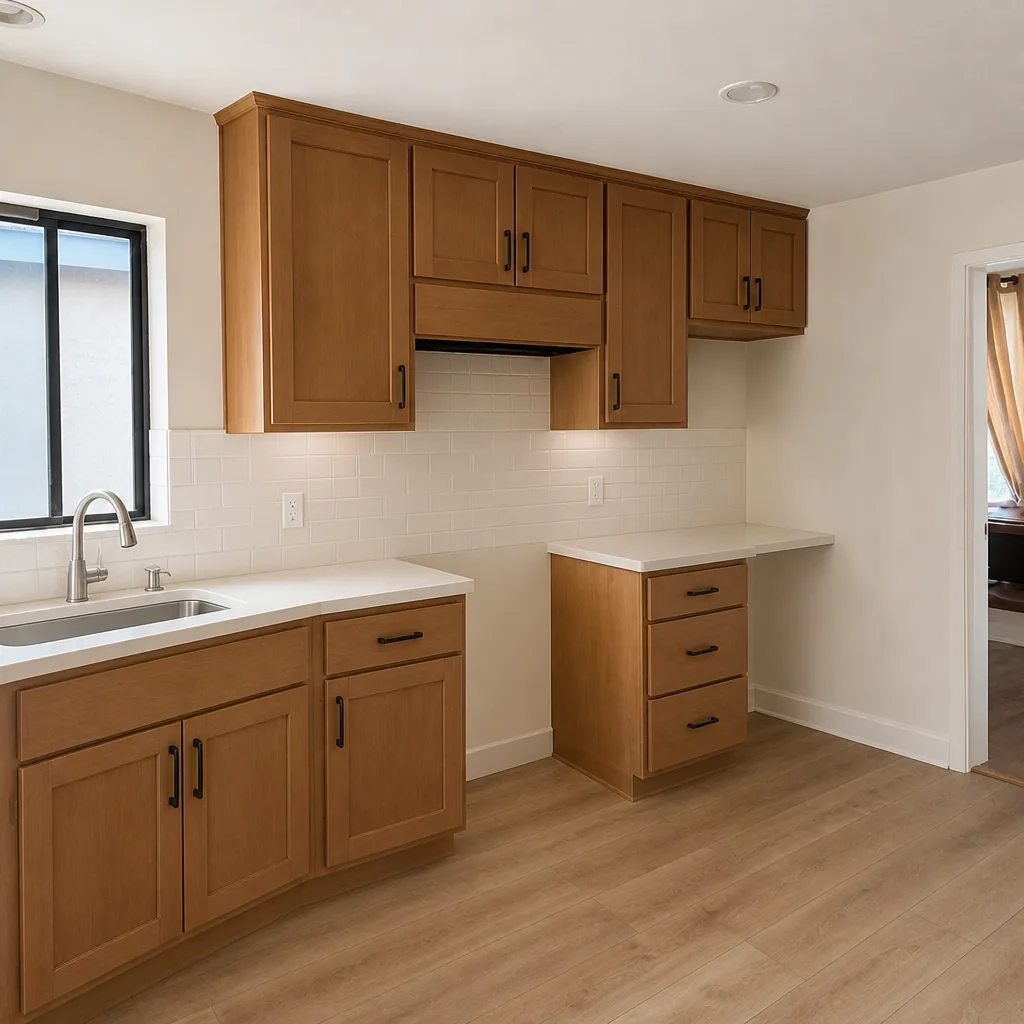
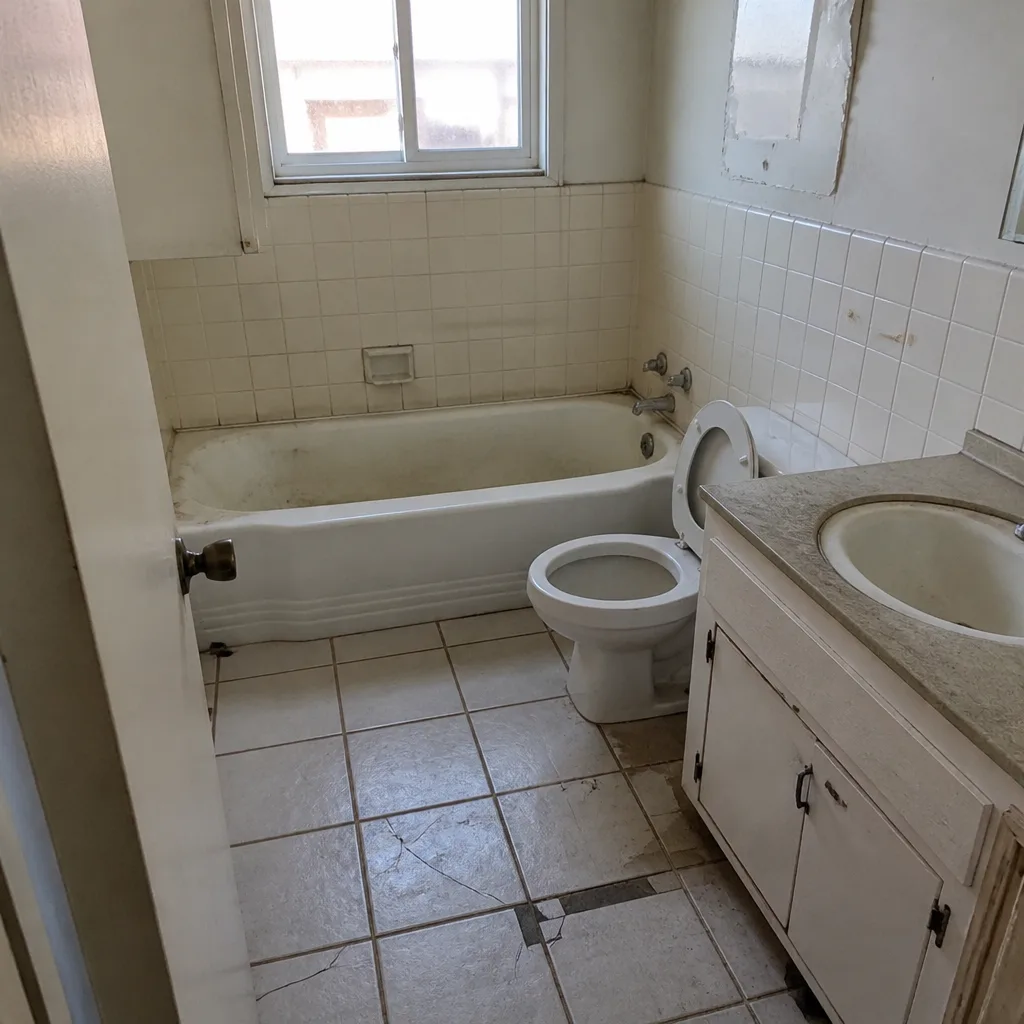
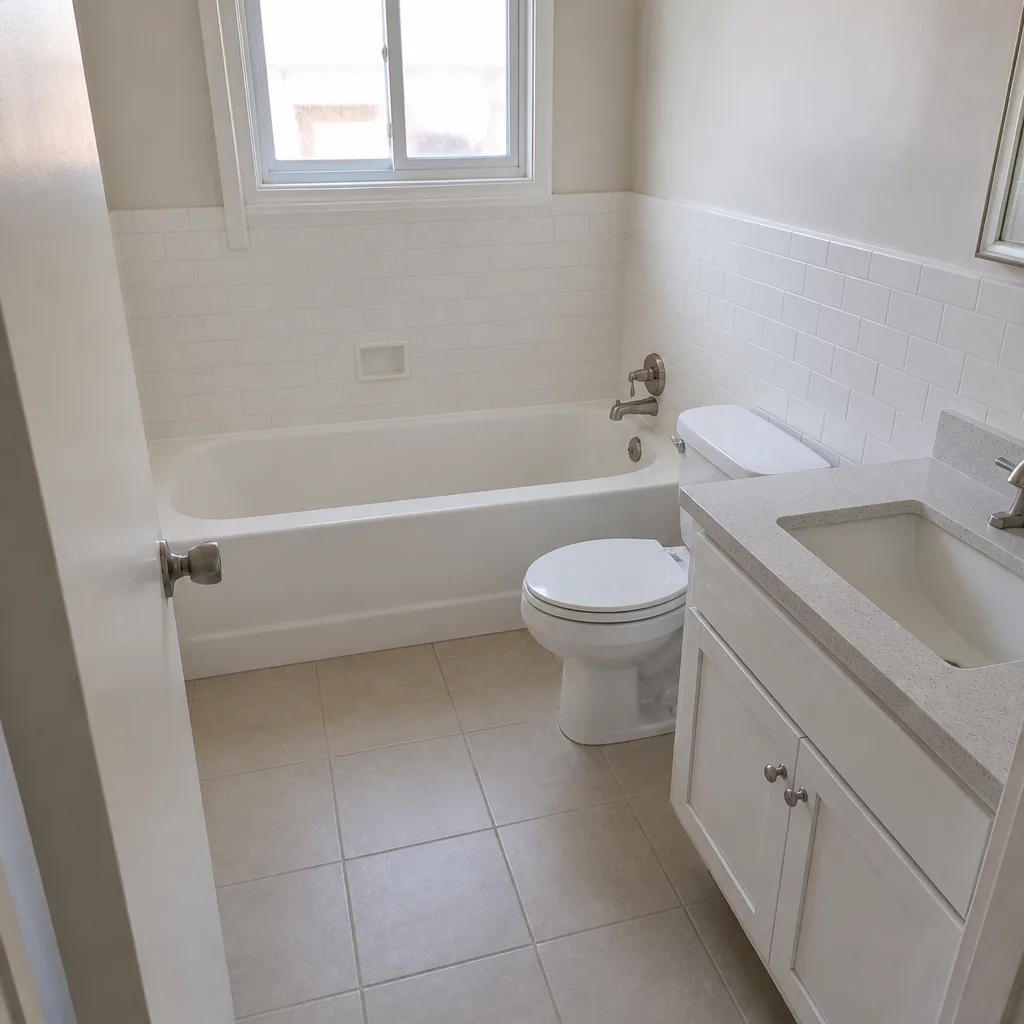
See the difference
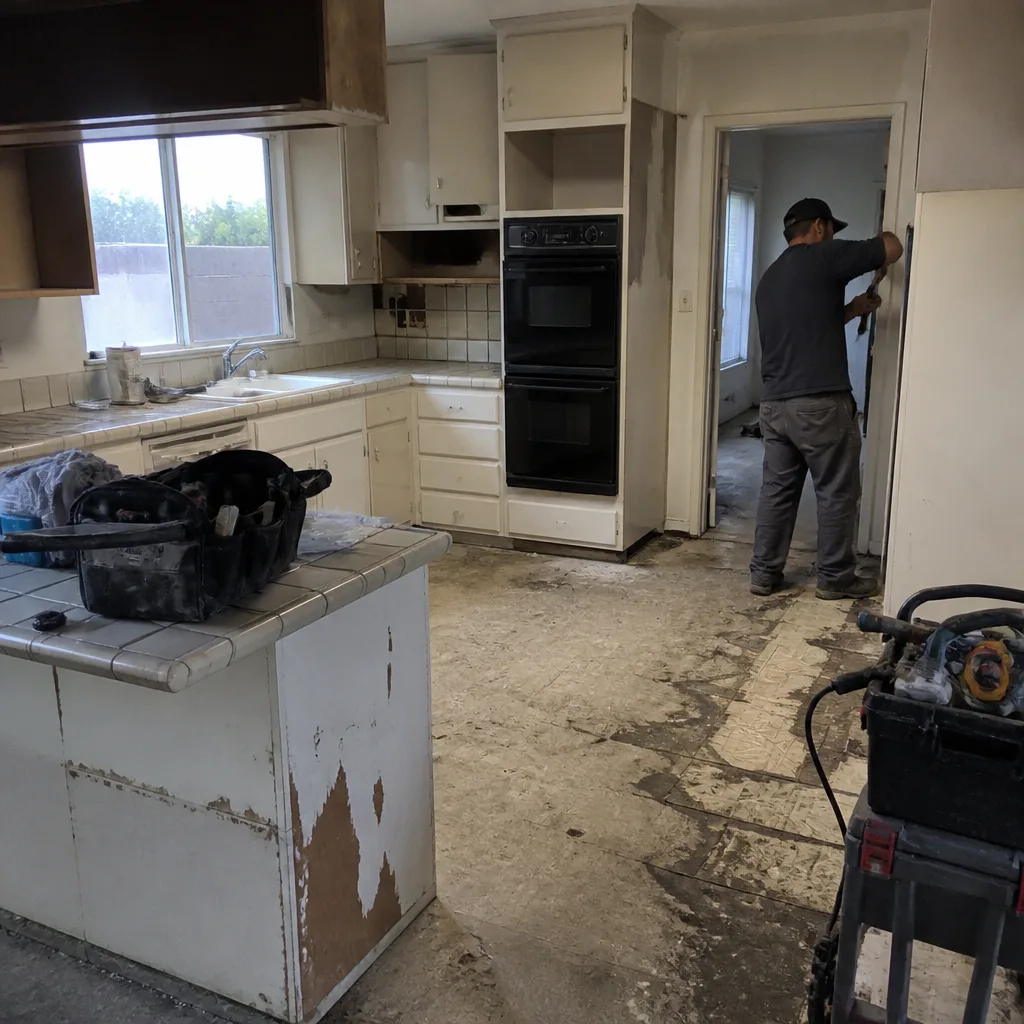 Before
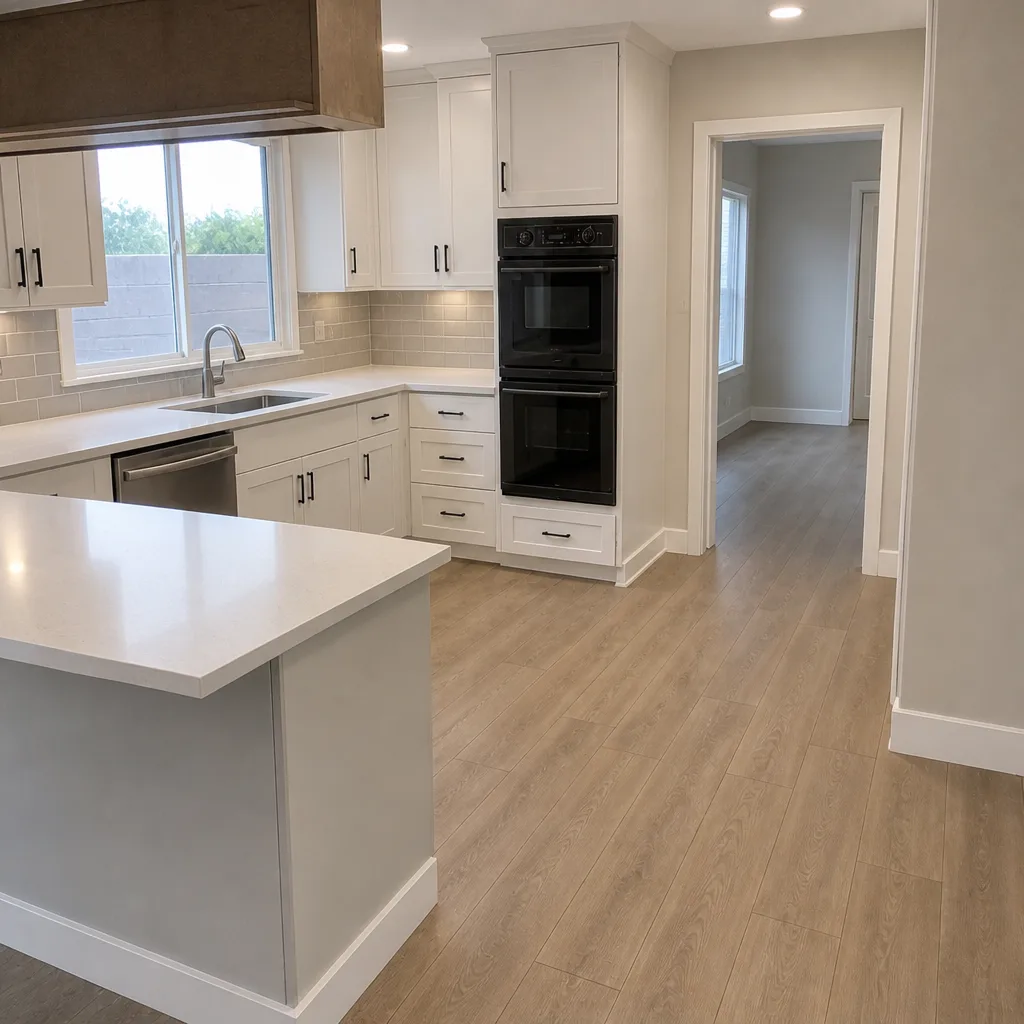 After
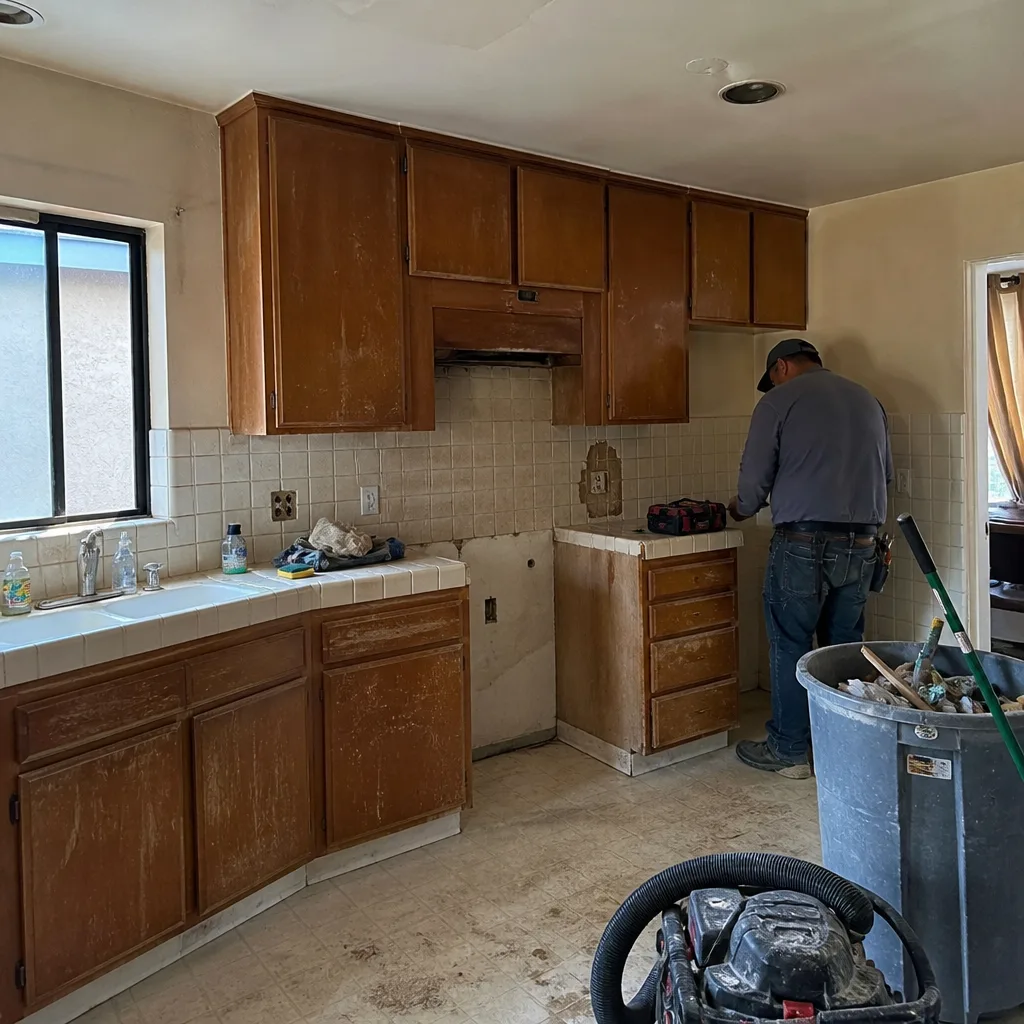 Before
 After
 Before
 After
When to Call a Professional
Some jobs are obvious: a kitchen that needs cabinets and countertops together, a bathroom that needs tile, plumbing, and fixtures, an addition or ADU that requires permits and structural work, a roof that’s reached the end of its service life, windows that leak or fog, a fence that’s leaning, a driveway that’s cracked through. Any of these is a professional job, and some are code-sensitive enough that doing them yourself creates problems at resale.
When the project crosses trade lines or touches structure, that’s the clearest sign to bring in a general contractor. If you’re in Mission Viejo and want to talk through what your project involves, Construction Mission Viejo offers free estimates in Mission Viejo with itemized, written line-item quotes. Call (833) 620-5454. We answer 24/7. Fast dispatch from 7am to 7pm, Sunday through Friday. Our technicians have up to 8 years of experience, and we work with a documented roster of 50+ manufacturer brands so the material tier is your choice, not ours.
Frequently Asked Questions

Check the contractor’s license number on the California State License Board lookup, confirm the license class matches your project scope, and verify it’s current. A B general building contractor license covers multi-trade and structural work; specialty licenses cover single trades only. After the license checks out, ask about local permit history and HOA experience, because those aren’t tracked by the state.
Yes, for most larger residential projects. Kitchen and bath remodels that move plumbing or electrical, additions, ADUs, and structural changes all require permits from the City of Mission Viejo. Ask your contractor directly whether permits are included in their scope; a bid that leaves permits to the homeowner is a warning sign. Permits and inspections protect you at resale.
A specialty contractor is licensed for one trade, such as roofing or electrical. A general building contractor (B license) can manage projects that span multiple trades and structural work. If your project touches more than one trade or involves structure, you need a B license running the job. Missions Viejo homes often have layered upgrades where the scope crosses trades.
Most planned communities in Mission Viejo require architectural committee approval before exterior work begins. This includes additions, window replacements, roofing changes, fences, and driveway pavers. Ask your contractor whether they’ve submitted to architectural committees before; the process can add weeks to your timeline. Budget for it up front rather than discovering it mid-project.
It depends heavily on scope. A bath remodel runs shorter than a kitchen, which runs shorter than an addition or ADU. The timeline also includes permit review with the City of Mission Viejo and any HOA architectural review, which can take weeks each. A realistic timeline names those phases explicitly. A contractor who skips them in the estimate is either guessing or learning the local process on your project.
A free estimate means the contractor walks the project with you, discusses your scope and material preferences, and provides a written itemized bid at no cost. The written estimate sets the final price. We bring the options across our brand roster and you make the call on what goes in. Call (833) 620-5454 to schedule yours; we answer 24/7 with fast dispatch from 7am to 7pm, Sunday through Friday.
The Bottom Line
Hiring a contractor in Mission Viejo is a process, not a click. Verify the license class against your scope. Ask the local questions that no state database answers: permit history with the City of Mission Viejo, HOA architectural experience, subcontractor stability. Compare itemized bids line by line so you’re comparing the same job, not the same marketing. Read the contract for vague scope, open allowances, and a front-loaded payment schedule. Build a timeline that accounts for permit review and HOA approval. Do those things in order and you’ll hire the right contractor for your project. Skip them and you’ll find out what you missed in the middle of a remodel. For a free estimate, call Construction Mission Viejo at (833) 620-5454. We answer 24/7. Fast dispatch from 7am to 7pm, Sunday through Friday.
Written by the team at Construction Mission Viejo.