Last updated November 18, 2026



Free written scope consultation - allowances, timeline, and change-order rules on paper before a single trade is scheduled
Driveway & Pavers Maintenance Checklist for Mission Viejo Homeowners
Almost every paver maintenance guide you’ll find online was written for the Midwest, where freeze-thaw cycles are the villain and salt is the weapon. Mission Viejo doesn’t have that problem. Our pavers rarely crack from ice pushing up through a joint. What actually ages a driveway here is quieter: strong inland sun that bleaches color, alkaline soil that pushes white mineral bloom to the surface, and a rain schedule that goes from months of nothing to sudden heavy winters. A paver driveway that looked perfect at installation can shed a large share of its joint sand within about eighteen months of dry heat, and once that sand is gone, weeds and shifting follow fast. This checklist walks through the failure modes we actually see in Mission Viejo, season by season, and tells you what to check, what to clean with, when to re-sand, and when to stop patching and call someone.
Quick Answer
Paver maintenance in Mission Viejo comes down to five recurring tasks: sweep and top up joint sand once a year (more often for polymeric), clean efflorescence with a pH-neutral cleaner rather than acid, check for settlement along edges and at the base of slopes every spring, refresh the sealer every few years depending on sun exposure, and inspect the concrete or aggregate base after the first heavy winter rain. Done on that rhythm, most driveways hold their color and their joints well past a decade. Skipped, the fix goes from a weekend of sweeping to a full reset of a settling field.
Styles & brands we work with
- Kitchen remodeling
- Bathroom remodeling
- Home additions & ADU
- Roofing
- Windows & doors
- Driveway & pavers
- Fence
Table of Contents
- Why Mission Viejo Pavers Fail Differently Than the Rest of the Country
- UV Bleaching, Color Fade, and Spalling on Belgard and Tremron Pavers
- Efflorescence: The White Bloom That Comes From Alkaline Soil
- Re-Sanding Intervals for Polymeric vs. Regular Sand
- Catching Paver Settlement Before It Becomes a Full Reset
- Sealer Selection: Wet-Look vs. Natural Finish in 90°F Heat
- Your Seasonal Maintenance Calendar for Mission Viejo
- Common Mistakes to Avoid
- When to Call a Professional
- Frequently Asked Questions
Why Mission Viejo Pavers Fail Differently Than the Rest of the Country
The maintenance advice that works here starts with recognizing that our climate is not the climate most paver guides assume. In most of the country, the year’s biggest stress on a driveway is the freeze-thaw cycle: water gets into a joint, freezes, expands, and pries pavers apart. Mission Viejo doesn’t run that cycle. What we run instead is an alternating drought-and-deluge pattern. Summers stay dry for months. Then winter arrives and delivers concentrated rain on ground that has baked and shrunk all summer. That swing does two things at once: it drives the clay-heavy native soil beneath a driveway through shrink-and-swell cycles, and it washes loose joint sand away in a single storm.
On top of that, the native soil in and around Mission Viejo tends toward the alkaline end of the scale, and that alkalinity is what feeds the white mineral haze called efflorescence. Combine alkaline soil with intense UV and long stretches above 90°F and you have three distinct stressors – heat, chemistry, and water rhythm – none of which is the frost most guides warn about. In our experience, the driveways that last here are the ones maintained on a Mission Viejo schedule, not a Minnesota one.
One more local factor: how the driveway was built. A paver surface is only as good as the base under it. In Mission Viejo, the best driveways sit on a properly compacted, well-drained aggregate base laid over geotextile fabric. When that base was undersized or the subgrade wasn’t prepped for expansive soil, no amount of sweeping and sealing will hold the surface flat. If you’re not sure how yours was built, a maintenance inspection is a reasonable time to find out.
UV Bleaching, Color Fade, and Spalling on Belgard and Tremron Pavers
Sun does the slow, invisible damage first. Pavers from quality manufacturers like Belgard and Tremron are made with UV-stable pigments, but even good pigments mellow with constant exposure. What shows up as “my red pavers turned pink” is usually a combination of pigment fade and surface wear, and it’s most noticeable on the pavers that take the most direct sun – the ones facing south, and the open field in the center of the driveway where shade from a house or a mature tree never reaches.
Spalling is a different issue and worth learning to tell apart. Spalling is when a thin, top layer of the paver flakes or pops off; it tends to appear as small chips or pale patches with a rougher texture underneath. On an older driveway, mild spalling can be cosmetic. On a newer driveway with widespread spalling, it points at a manufacturing or installation problem, and that’s a conversation to have with the installer rather than something you fix with cleaner. Walk the driveway once a year in bright, low-angle morning light and you’ll catch the fade and the first chips before they spread.
What you can do about fade:
- Sealer with UV blockers. A quality paver sealer includes UV inhibitors that slow the bleaching and lock in a more saturated look. Reapplying on schedule is the single most effective anti-fade step.
- Even exposure. Pavers under shade age differently than pavers in sun, which is why the field of the driveway often fades unevenly. Sealing helps slow the field-fade pattern.
- Don’t over-wash. Aggressive power-washing strips the top layer and accelerates fade. Keep pressure low and use the right cleaner instead of high pressure.
- Replacement pavers. If a handful of pavers have spalled badly, replacing just those is a cheap, quick part of a maintenance visit – as long as the exact color line is still available from the manufacturer.
On the design side, if you’re planning a new driveway or a section repair, choosing a slightly lighter paver color reduces how hot the surface gets and reduces the fade contrast between seasons. When you’re ready for that conversation, our driveway & pavers team can walk the different Belgard and Tremron color lines and what each one does in this sun.
Efflorescence: The White Bloom That Comes From Alkaline Soil
Efflorescence is the chalky white haze or powder that appears on the surface of concrete and clay pavers, most often after rain. It’s the visible result of water drawing salts up through the paver from the soil and base beneath, then evaporating and leaving the salt on the surface. In Mission Viejo, our alkaline soil makes this a common sight, and the wet winter season is when it blooms hardest. The frustration is that it usually comes back after you clean it, until the underlying salt source settles down or the water path is fixed.
The most important rule is the cleaning method. Efflorescence is alkaline, which means the instinct to reach for muriatic acid will actually etch and dull the paver surface. That’s a mistake that turns a cleaning job into a restoration job. The correct approach is a pH-neutral, efflorescence-specific cleaner, applied as directed, followed by thorough rinsing. Here’s the safe protocol:
- Wait and watch first. Mild efflorescence often disappears on its own after a dry stretch. Give it a few weeks before treating.
- Dry-brush the surface. A stiff broom knocks off the loose powder so the cleaner reaches the paver.
- Use a pH-neutral efflorescence cleaner, never acid. Dilute per the label, apply to a test spot first, and keep it off any metal edging.
- Rinse thoroughly and let it dry. Rinse drive the residue away rather than pushing it into joints, and let the pavers dry before judging the result.
- If it returns season after season, investigate the water path. A paver edge that traps water, or a slope that ponds, needs fixing at the source before the bloom stops.
One deeper fix: a penetrating, breathable sealer that lets water vapor escape without carrying salt to the surface can reduce how often efflorescence recurs. Sealing a surface that’s already blooming locks the salt in, so always clean first, then seal. We handle this step as part of our paver maintenance scope, and if you’ve been fighting the same white bloom in Mission Viejo for multiple winters, it’s worth a look before the next rainy season.
Re-Sanding Intervals for Polymeric vs. Regular Sand
The joint sand is the unsung hero of a paver driveway. It locks each paver in place, keeps weeds from rooting, and channels water off the surface instead of letting it seep into the base. Lose it and everything downstream – weed growth, shifting, uneven settlement – follows within a single rainy season. The two options, regular joint sand and polymeric sand, wear on different schedules in our climate.
- Polymeric sand. A polymer-modified joint sand sets up somewhat like a flexible grout. In Mission Viejo’s dry heat and hard sun, expect meaningful depletion at roughly eighteen to twenty-four months, with a full re-sand every two to three years. Polymeric is the better choice for driveways that see real traffic and for anyone who wants weed resistance.
- Regular (unmodified) sand. Cheaper and easy to top off, but it washes out in heavy winter rain and blows away in dry, windy stretches. It usually needs a top-up once or twice a year, more in a wet winter. Best for a low-traffic path or a quick patch.
Re-sanding is something a homeowner can do, but it’s fussy work and the results vary. The basic sequence is simple: clean out old, loose material, spread new sand across the surface, work it into the joints with a broom, compact the field, then sweep off the excess. Polymeric sand also has a curing window – it must not get wet until it sets – which in our climate means watching the forecast closely, because we get sudden winter showers with little warning. On larger driveways, our team handles re-sanding as part of the ongoing maintenance we offer for driveway pavers in Mission Viejo, including the right compaction step.
Whatever sand you use, the interval is the same trigger: if water stops running off between the pavers and starts draining straight through into the joints, it’s time.
Catching Paver Settlement Before It Becomes a Full Reset
Pavers settling unevenly is the most expensive problem on the list, and it’s the one where early detection saves the most money. In Mission Viejo, the underlying cause is usually the base. The clay-heavy native soil under a driveway expands and contracts with the wet/dry cycle, and if the aggregate base over it is thin, poorly compacted, or not drained, the surface follows the soil. Soil movement on its own is normal. What’s not normal is paver settlement that keeps going.
Where to look, every spring after the rainy season:
- The driveway edges. Settlement shows up at the perimeter first, where pavers meet the garage apron, the street apron, or a retaining edge. Look for a lip you can feel with your foot.
- The base of any slope or grade change. Water runs here; watch for ponding and for pavers that look pressed lower than their neighbors.
- Around any drain or low point. Standing water after rain is the clearest early sign the base under that spot is failing.
- The “trip test.” Walk the driveway in flat shoes and note any spot where a paver edge catches your toe. A single settling event is normal; a growing low spot is not.
A few pavers that have dropped a quarter inch or less are usually a lid-off-and-re-set job: lift the affected pavers, add and compact base material, reset, re-sand. When the settlement covers a wide field, especially near the street apron or the garage, the base has likely failed in that section and needs a proper rebuild. The later you catch it, the more pavers you lift. We handle both the quick reset and the base-rebuild as part of our driveway & pavers service, and an inspection right after the first good winter rain is the most useful time to do it.
Sealer Selection: Wet-Look vs. Natural Finish in 90°F Heat
Sealer is not paint and it doesn’t fix damage. It’s a protective layer that locks in joint sand, slows UV fade, and makes the driveway easier to clean. The two choices are wet-look and natural finish, and they behave differently in the long, hot stretches when it’s above 90°F for weeks. Here’s how to pick between them.
- Wet-look (film-forming) sealer. Adds depth and deepens color, like a fresh rain that never dries. In sun-baked areas it can soften and get tacky during a heat wave, and it can trap moisture if applied over efflorescence. Use it if you want color pop and you don’t mind re-applying on a shorter cycle.
- Natural finish (penetrating or matte) sealer. Soaks in and protects without changing the color much. It breathes, resists turning tacky in the heat, and doesn’t trap salt and moisture the way a film does. The better pick for Mission Viejo driveways with full sun exposure.
Brand selection matters here. Look for sealers made by manufacturers whose formulations are tested for hot climates and UV exposure – the same lines that support their paver systems. Avoid any sealer that doesn’t list UV inhibitors or that recommends a recoat on a very short cycle; that’s a sign it’ll break down fast in the sun. Apply in cooler weather if you can, always on a clean, dry surface after the efflorescence is cleaned, and always on a small test paver first.
Practical middle ground: many Mission Viejo homeowners use a natural-finish penetrating sealer on the open, sunny field of the driveway and a wet-look product only on shaded sections or near the entry where the color is more visible. The two need not be the same. If you’re sealing a driveway for the first time and aren’t sure how your pavers behave in the heat, have the sealer choice reviewed before you buy, not after.
Your Seasonal Maintenance Calendar for Mission Viejo
Here’s the year in paver maintenance, mapped to our actual weather. The specifics – rain, sun, heat – drive the timing.
- Spring (after the last heavy rains). Do the big inspection: walk the edges and drives, feel for settlement, check every drain and low point for ponding, and sweep off winter debris. This is also when efflorescence shows up strongest, so clean it now with a pH-neutral product.
- Early summer (before the heat sets in). Top up or re-sand the joints. Polymeric sand needs a dry curing window; get it done before the long hot stretch. If it’s a sealer year, apply then too. Both are easier before the surface bakes.
- Late summer. Check for new weed growth, sun fade, and any spalling. This is a light inspection, not a big-job season.
- Fall (before the winter rain begins). Clear all debris from drains and joints, top off sand one more time if it’s washed down, and re-check the edges and slopes. Getting ahead of the rain season saves the most repair money.
- Winter (during and after storms). Walk the driveway after the first heavy rain. Check for ponding, new settlement, and efflorescence bloom. Note anything that’s changed before it dries and hides.
If you’d rather not manage the calendar yourself, our maintenance team runs this same seasonal sequence for Mission Viejo driveways, and we handle the re-sanding and resealing so you’re not working around a weather window. It’s one plan, one schedule.
Common Mistakes to Avoid
- Power-washing the driveway at full pressure. High pressure strips the paver surface and joint sand, accelerating fade and making the next re-sand inevitable. Use the right cleaner with low pressure instead.
- Reaching for muriatic acid on efflorescence. Efflorescence is alkaline; acid etches the paver and dulls it. A pH-neutral efflorescence cleaner is the correct tool, and it’s the one most homeowners don’t have on the shelf.
- Sealing over a blooming or dirty surface. Sealer over efflorescence or trapped moisture locks it in and produces a cloudy, patchy film. Always clean, let dry, then seal.
- Skipping the spring inspection because “it looks fine.” Settlement is invisible from standing height. The edges and slopes are where it starts, and catching it early is what keeps it a re-set job instead of a rebuild.
- Assuming a sidewalk paver approach works on a driveway. A driveway takes car loads and constant sun. Regular sand on a driveway will wash away within a season; polymeric sand and a well-built base are what hold here.
- Waiting until weeds are visible to address joint sand. Weeds are the symptom. The missing sand is the cause, and re-sanding is the fix. Pull weeds by hand first, then re-sand.
- Choosing a sealer on the shelf with no UV protection. In Mission Viejo’s sun, a sealer without UV inhibitors fades and flakes in one season. Check the labels for UV-blocking and hot-climate guidance.
When to Call a Professional
Most paver maintenance is manageable for a motivated homeowner: sweeping, topping up sand, cleaning efflorescence. There are clear points where it’s smarter to bring in a contractor. Call a professional if you see settlement across a wide area (not just one or two pavers), if the driveway is ponding water after rain, if efflorescence keeps returning season after season, or if the base under a section seems to be failing near the street or garage apron. A proper inspection will tell you whether it’s a spot fix or a base rebuild.
Construction Mission Viejo offers free estimates in Mission Viejo. Call (833) 620-5454 to schedule a walk-through. We answer 24/7.
Frequently Asked Questions
Once a year is typical for polymeric sand in Mission Viejo, and every two to three years for a full re-sand. Regular sand needs topping up one or twice a year. In dry, sunny stretches the joints lose sand faster, so check after summer and again before winter rain. Call (833) 620-5454 if you want a professional re-sand – estimates are free.
That’s efflorescence, salt brought to the surface by water rising through the pavers from our alkaline soil. It blooms most in the wet winter and usually looks worse than it is. Clean it with a pH-neutral efflorescence cleaner – never muriatic acid – and let it dry. Call (833) 620-5454 if it returns after several seasons and you want the water path addressed.
Yes, but at low pressure. High pressure strips the paver surface, blows out joint sand, and speeds up fade. Use a wide nozzle at low pressure, a pH-neutral cleaner, and a test spot first. If you’re not sure how much pressure is safe, a professional cleaning is the safer bet. Call (833) 620-5454 for a free estimate.
Pavers will last decades structurally, but without a sealer they fade, lose color saturation, and accumulate stains. In our sun, unsealed pavers look noticeably worn faster than sealed ones. Seal every few years with a UV-resistant product. When you’re ready, our team handles sealing as part of our driveway & pavers service in Mission Viejo; call (833) 620-5454 for a free estimate.
That’s usually the base, not the pavers. In Mission Viejo, the shrink-and-swell of the clay subgrade moves the surface, and a thin or poorly drained base fails first at the edges and slopes. A few pavers are a spot reset; a wide area is a base rebuild. Call (833) 620-5454 for an inspection before it spreads.
Polymeric sand on a driveway. Regular sand washes out in our winter rains and doesn’t lock pavers in place on a surface that sees car traffic. Polymeric is the better long-term choice for Mission Viejo driveways. Call (833) 620-5454 if you want the joints done right the first time; estimates are free.
The Bottom Line
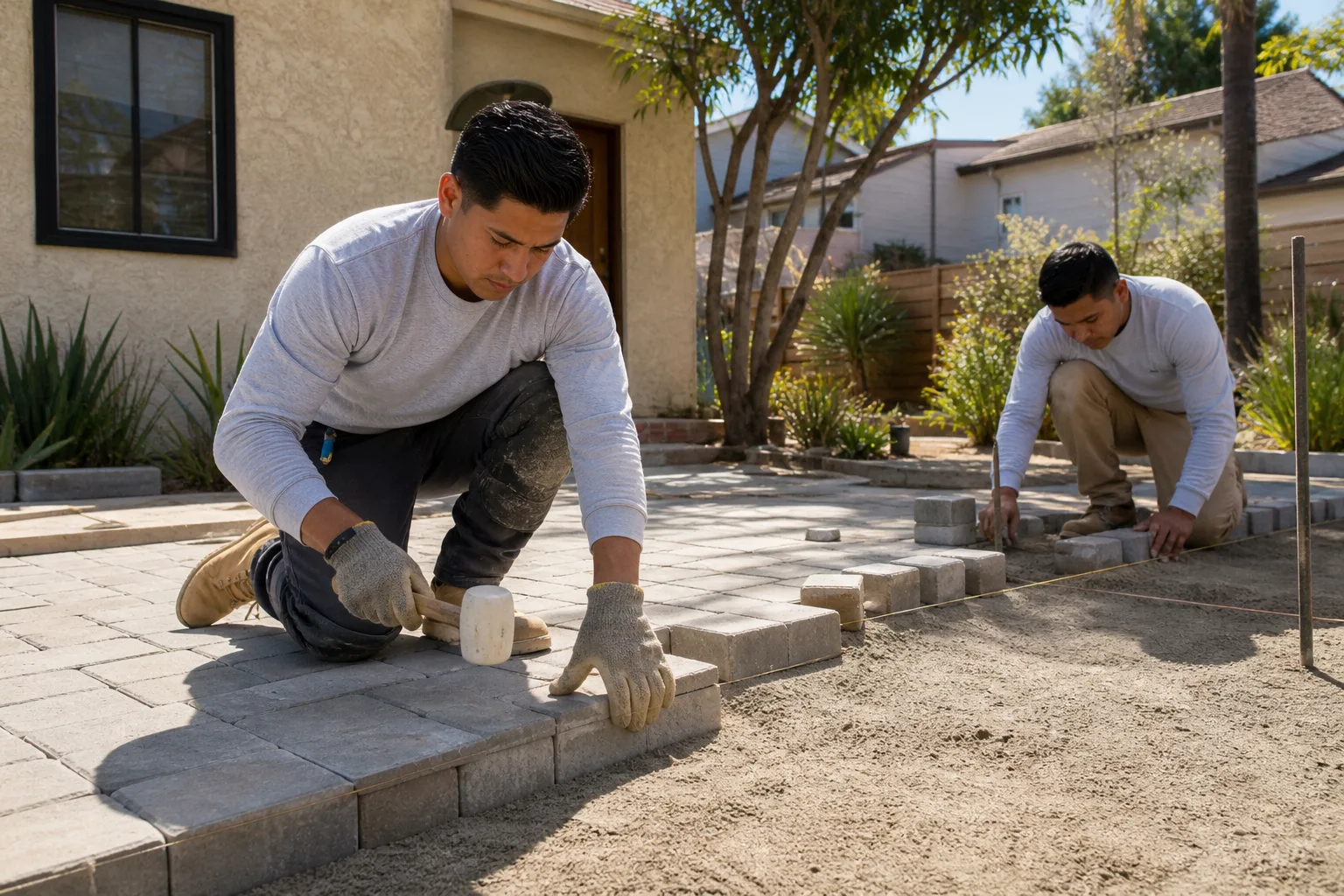
Mission Viejo pavers don’t fail from frost. They fail from sun, alkaline soil, and a rain season that arrives all at once. The checklist that actually protects them is our own: inspect in spring, re-sand before summer heat, clean efflorescence with a pH-neutral product (never acid), watch the edges and slopes for early settlement, and keep a UV-resistant sealer on schedule. Do that and a quality Belgard or Tremron driveway holds its color and its joints far longer than one that’s ignored. When the settlement is wide or the base is failing, that’s when a contractor earns the call. They’re built to be maintained, not replaced – and most Mission Viejo driveways can go a long way on this rhythm.
We’re a full-scope contractor, which means we handle more than the driveway. If your maintenance walk turns up a fence that’s leaning, windows that need replacing, or an ADU you’re thinking about, we’re the same company. Explore our Construction Mission Viejo services, our fence installation work, and our home additions & ADU services, and get every trade from one point of accountability. We bring the options; you make the call.
Ready to get your driveway on a maintenance schedule that fits our climate? Call (833) 620-5454 for a free estimate. We answer 24/7. Fast dispatch from 7am to 7pm, Sunday through Friday.
Written by the team at Construction Mission Viejo.
See the difference
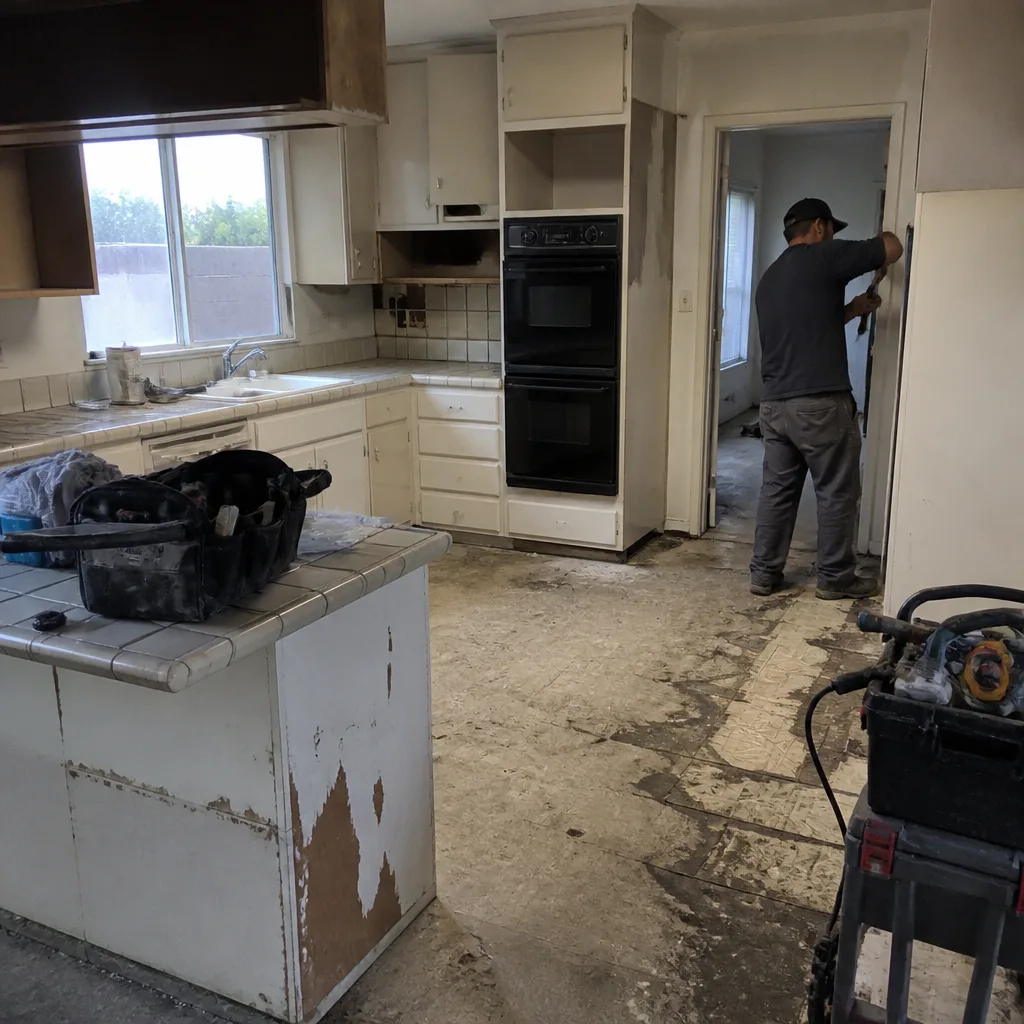 Before
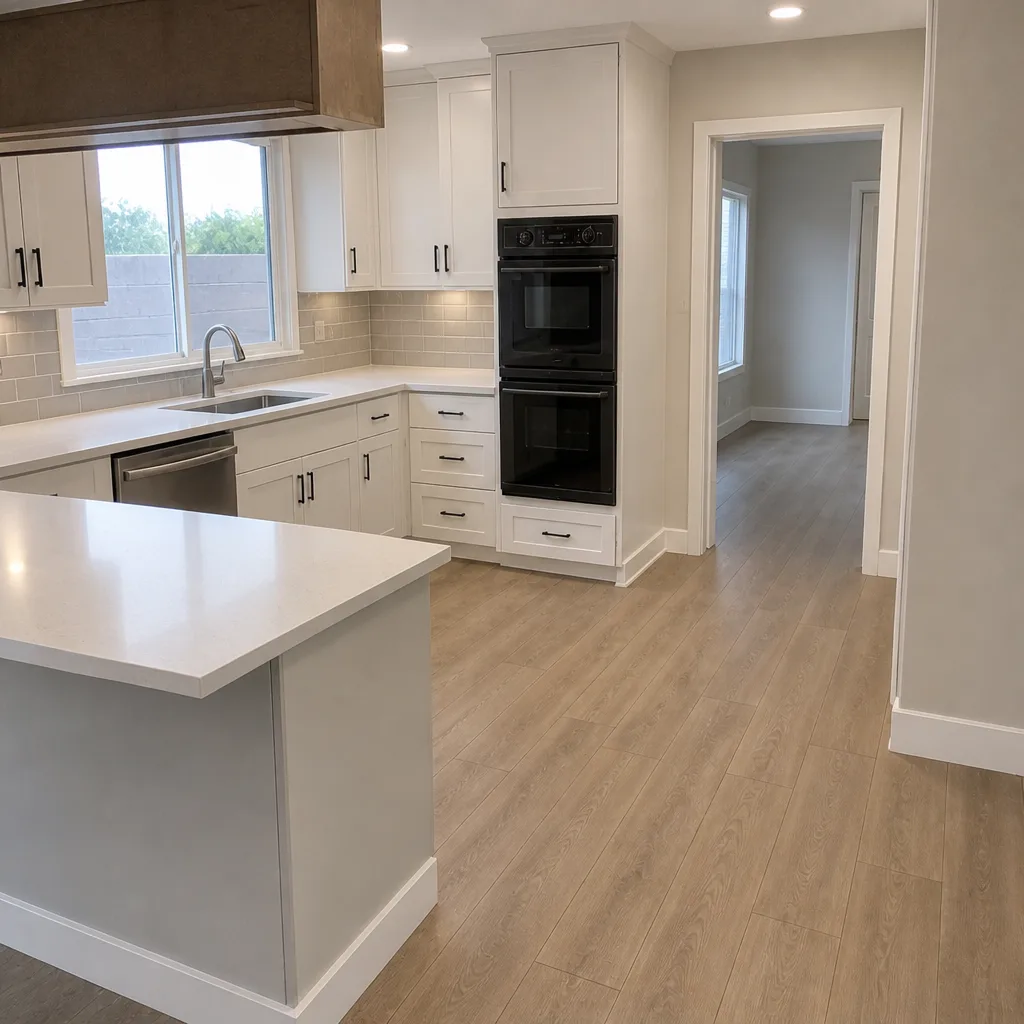 After
 Before
 After
 Before
 After