Last updated November 18, 2026




Free written scope consultation - allowances, timeline, and change-order rules on paper before a single trade is scheduled
Construction Emergency Preparedness Guide for Mission Viejo Homes
The emergency rarely arrives as a single dramatic event. More often it’s the small, ignored condition that turns a routine storm into water pouring through a light fixture. A gutter that separated from its fascia last spring doesn’t announce itself until the first hard rain of the season pushes water behind the trim and into the wall cavity. The same logic holds on Mission Viejo hillside lots, where a cracked swale or a settled grade quietly redirects runoff toward a foundation slab. This guide walks you through the structural vulnerabilities that turn regional events into personal property damage, the materials and maintenance that make a real difference, and how to document a Mission Viejo home so that if an emergency does hit, you’re not rebuilding your case from memory.
Quick Answer
Preparing a Mission Viejo home for construction emergencies means hardening the exterior envelope before the event arrives: fastening gutters and flashing so they survive wind-driven rain, choosing ember-resistant vents and non-combustible exterior materials on properties near the wildland interface, checking grading and drainage on hillside lots so runoff stays where it should, and photographing the home’s construction condition every year so insurance claims rest on evidence rather than recollection. Most of the work is scheduled maintenance, not emergency response. The homeowners who come through a storm with the least damage are the ones who handled the small items months earlier.
Styles & brands we work with
- Kitchen remodeling
- Bathroom remodeling
- Home additions & ADU
- Roofing
- Windows & doors
- Driveway & pavers
- Fence
Table of Contents
- Why Mission Viejo Homes Face a Specific Mix of Risks
- Wildfire Structural Hardening at the Wildland Interface
- Drainage, Grading, and Hillside Lot Risks
- Roof and Envelope Failures That Start Small
- Post-Event Inspection Protocol
- Emergency-Ready Material Stocklist
- Insurance Documentation Prep
- What Belongs on a Contractor’s Schedule vs. Yours
Why Mission Viejo Homes Face a Specific Mix of Risks
Mission Viejo sits on a landscape that gives you three distinct stressors. Wildfire interface zones press up against the city’s edges, where dry vegetation and wind corridors can carry embers well ahead of any flame front. Soils in parts of the area include liquefaction-adjacent conditions, which means ground movement and settling are factors under the right trigger. And the region’s atmospheric river events deliver concentrated rainfall that finds every weak point in a drainage system. None of these are abstract risks. They’re the reasons a Mission Viejo home needs a slightly different preparedness plan than a home on flat inland ground.
The common thread is water and fire arriving at the envelope: the roof, the walls, the vents, the perimeter drainage. Once inside, both create the same downstream problems, from rotted framing to compromised electrical runs. Construction Mission Viejo works across roofing, windows and doors, and exterior upgrades in this same environment, which is why our recommendations start at the roofline and work outward. A single contractor with full scope means the fix for a vent fire risk and the fix for the flashing around it get resolved together.
Here’s what that mix means practically:
- Wildfire pressure at the ridge and hillside edges, where ember exposure is the dominant threat rather than direct flame.
- Seasonal heavy rain that tests drainage capacity and finds under-sized or clogged systems fast.
- Ground movement and settling that opens hairline cracks in slabs, stucco, and foundations over time.
- Wind events that work loose roof material, fence panels, and gutter sections year over year.
Each of these is manageable with scheduled work. The most expensive lesson is treating them as something to react to after the fact.
Wildfire Structural Hardening at the Wildland Interface
Ember intrusion is the threat most often misunderstood. In wind-driven wildfire conditions, the majority of home exposures come from embers landing on and around the structure, not from a wall of flame reaching the siding. That means your vents, fascia, soffit, and deck surfaces do more to determine your home’s fate than any single defensive action taken during an event. For Mission Viejo homes near open-space edges, hardening these elements is the highest-return construction work a homeowner can schedule.
CAL FIRE maintains guidelines for exterior materials that reduce ignition risk in the wildland-urban interface. Those guidelines consistently point to non-combustible components around the structure’s vulnerable openings and edges. Here’s what that looks like in practice:
- Ember-resistant venting. Standard foundation and attic vents can admit embers into a cavity fire. Vents rated to resist ember entry at the 1/8-inch screening standard substantially reduce that pathway.
- Non-combustible fascia and soffit. Fiber cement and metal products outperform wood in this location and hold paint longer in our sun exposure.
- Deck surface choice. If a deck attaches to the home, the surface material and the gaps beneath determine whether embers ignite and stay lit against the structure.
- Roof class. A Class A roof assembly is the baseline. When we install roofing in GAF, CertainTeed, or Owens Corning, the underlayment and edge metal matter as much as the field shingles for ember behavior.
Fiber cement siding, like the James Hardie line, is a solid choice for the walls themselves because it doesn’t feed a fire the way wood does. None of this is a guarantee against every wildfire scenario, but it’s the difference between a structure with resistance built in and one relying on luck and defensible space alone. A free estimate will tell you where your Mission Viejo home currently sits against those standards.
Drainage, Grading, and Hillside Lot Risks
On flat ground, drainage is a nuisance. On a Mission Viejo hillside lot, it’s a structural question. When the region gets one of its atmospheric river events, the water volume in a short window can exceed what an aging or under-maintained drainage system can move. The result is runoff that pools against foundations, cuts channels through planting beds, and drives water under the slab. A moderate rain event becomes a foundation intrusion event when the grade and drainage were already compromised.
The inspection is straightforward, and you can do most of it yourself before scheduling a contractor for anything that needs repair:
- Walk the perimeter after rain. Look for puddles that persist more than a few hours, and note where water pools against the house.
- Check the swales. If your lot has a drainage swale, it needs to be clear and continuous. Settling or vegetation blocks it.
- Inspect the soil grade at the foundation line. The grade should slope away from the house, not toward it. A settled backfill can reverse that over time.
- Look at retaining walls and hardscape for tilt. Any lean or new crack is a sign the soil behind the wall is moving or saturated.
- Check gutters and downspouts for separation and discharge location. A downspout that dumps water next to the foundation defeats the purpose.
The intersection with driveway & pavers work is real. A driveway or paver installation done with the correct base and slope actively moves water away from the structure. If you’re already replacing a driveway, that’s the moment to correct the grade in front of the garage and the walkway that leads toward the side yard. The work needs a design that accounts for the site, and that’s what an on-site estimate produces.
Roof and Envelope Failures That Start Small
The roof doesn’t usually fail all at once. It fails at a flashing detail, a vent collar, or a section of underlayment that was never properly overlapped. In a steady rain, a small gap is manageable. In a wind-driven event, water is pushed uphill along the shingles and into every weak point it can reach. Water intrusion during heavy weather is almost always a deferred maintenance problem finally reaching its limit, not a storm that did something unpredictable.
The same principle applies to windows and doors. A failed weather seal or a sill that has lost its sealant is a point of entry. The PGT, CGI, and Therma-Tru products we install all come with the assumption that the surrounding installation was done to a standard that supports them. Installation quality is what determines whether a window above and below the average performs.
If you’re scheduling a replacement project, use the timing to close these gaps in one pass:
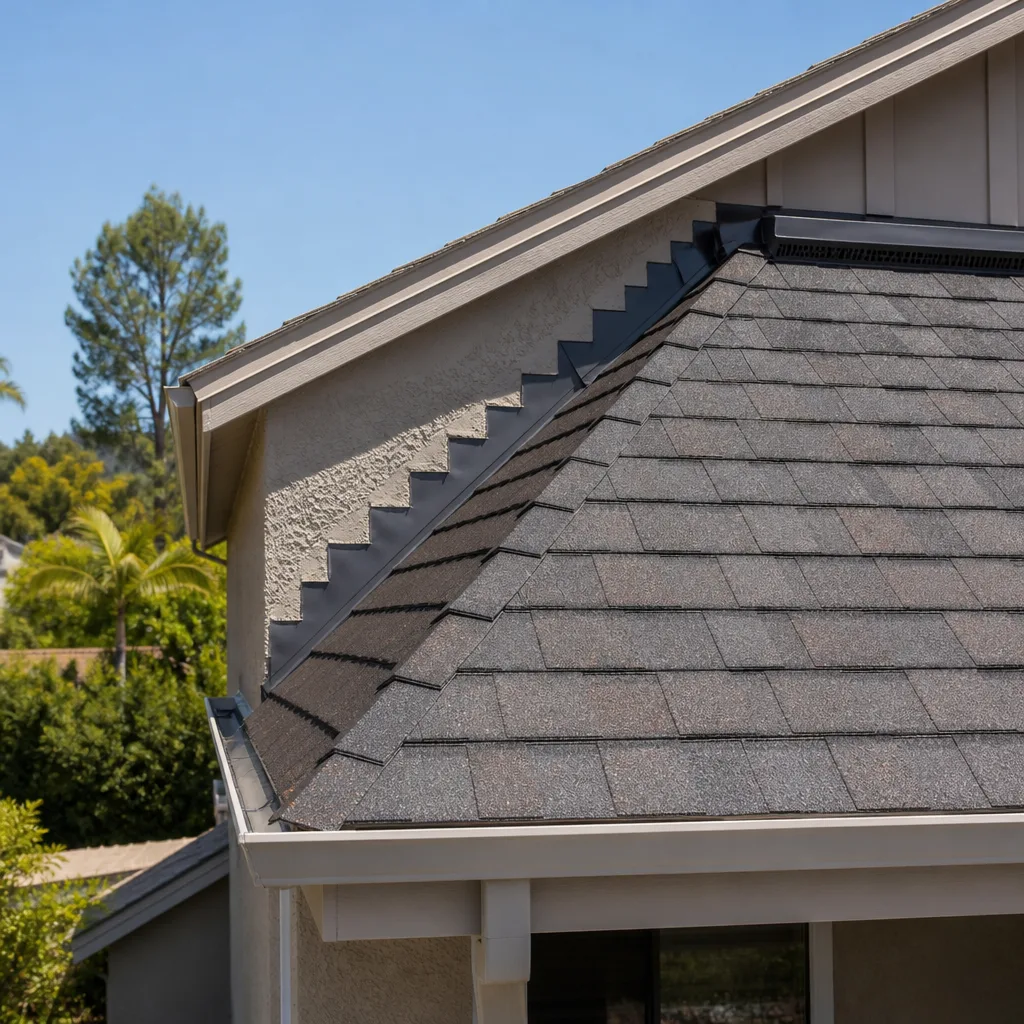
- Re-seal all penetrations: vent boots, satellite mounts, chimney flashing, and any pipe collar at the roof plane.
- Add or repair kick-out flashing where a roof edge meets a wall, an exact point of failure that often missed initial installation.
- Check the attic for daylight or staining under the deck after a storm. Both are early warnings.
- Fasten gutter sections to the fascia with the correct hangers. A gutter that separates is often a hanger failure, not a gutter failure, and the water behind it has nowhere to go but inside.
We keep the scope coordinated under one contractor because the flashing failure, the gutter separation, and the wall material all involve the same envelope. No handoff, no finger-pointing, and no one telling you the other trade caused the problem.
Post-Event Inspection Protocol
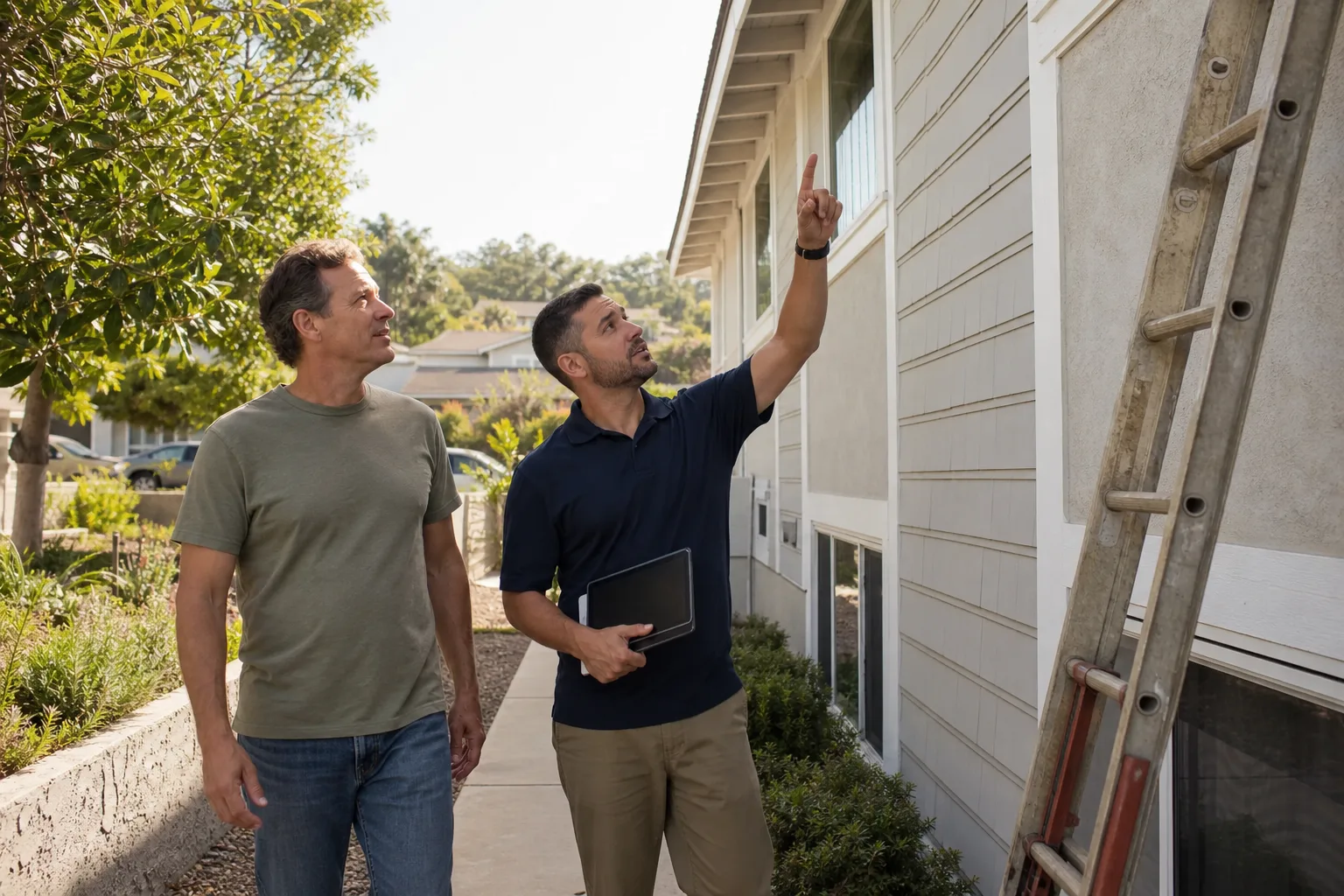
After a wind event, a heavy rain, or seismic activity, the question isn’t whether the house “looks fine.” It’s whether you know where to look. A five-minute walk-through that hits the right structural elements turns a costly hidden problem into a manageable repair. Here’s the sequence we recommend for Mission Viejo homes before returning to normal occupancy.
- Walk the perimeter and look up. Check the roofline for lifted shingles, loose ridge caps, and displaced edge metal. Note anything that looks like it has shifted.
- Inspect the fascia, soffit, and gutter attachment line. Look for separation between the gutter and fascia, sagging, or dents.
- Check window and door operation. If a window or door no longer closes cleanly, the frame or surrounding wall may have shifted.
- Look inside at wall-ceiling junctions and under windows. Staining, bubbling paint, or a soft spot is water intrusion evidence, often from days earlier.
- Examine the foundation and slab edge for new cracks. Note the width and orientation. Growth over 48 hours is worth a professional look.
- Check the perimeter drainage. Confirm swales and downspouts are still discharging where they should.
- Smell for gas. If you detect a gas odor, leave the home immediately and call your gas utility from outside. This is not a homeowner-inspection item.
Anything in items 1 through 5 that you can’t explain is worth a professional evaluation before you settle back in. Water intrusion that gets missed for a few days is dramatically more expensive than water intrusion found the same week. Structural work on a foundation or a compromised frame belongs with a licensed contractor, not a weekend fix.
Emergency-Ready Material Stocklist
The distinction that matters here is what you can handle before storm season versus what requires advance scheduling with a contractor. Setting up for a minor event is cheap and fast. Prepping for a major one takes a contractor’s calendar, which is why the second list starts in the dry season.
Keep on hand for the first response:
- Tarps or heavy plastic sheeting (enough to cover a damaged section of roof or a broken window).
- Roofing nails and a hammer, for temporary fastener repair.
- Exterior-grade sealant and a caulking gun.
- A battery-powered work light and spare batteries.
- Work gloves, safety glasses, and a utility knife.
- Sandbags or water barriers for doorway and garage perimeter protection.
- A wet/dry shop vac and absorbent towels for early water cleanup.
Requires advance contractor scheduling:
- Ember-resistant vent replacement and non-combustible fascia.
- Roof inspection and scheduled underlayment or flashing repair.
- Gutter hanger replacement, or a re-hang of the full gutter run.
- Deck surface replacement with a fire-resistant option.
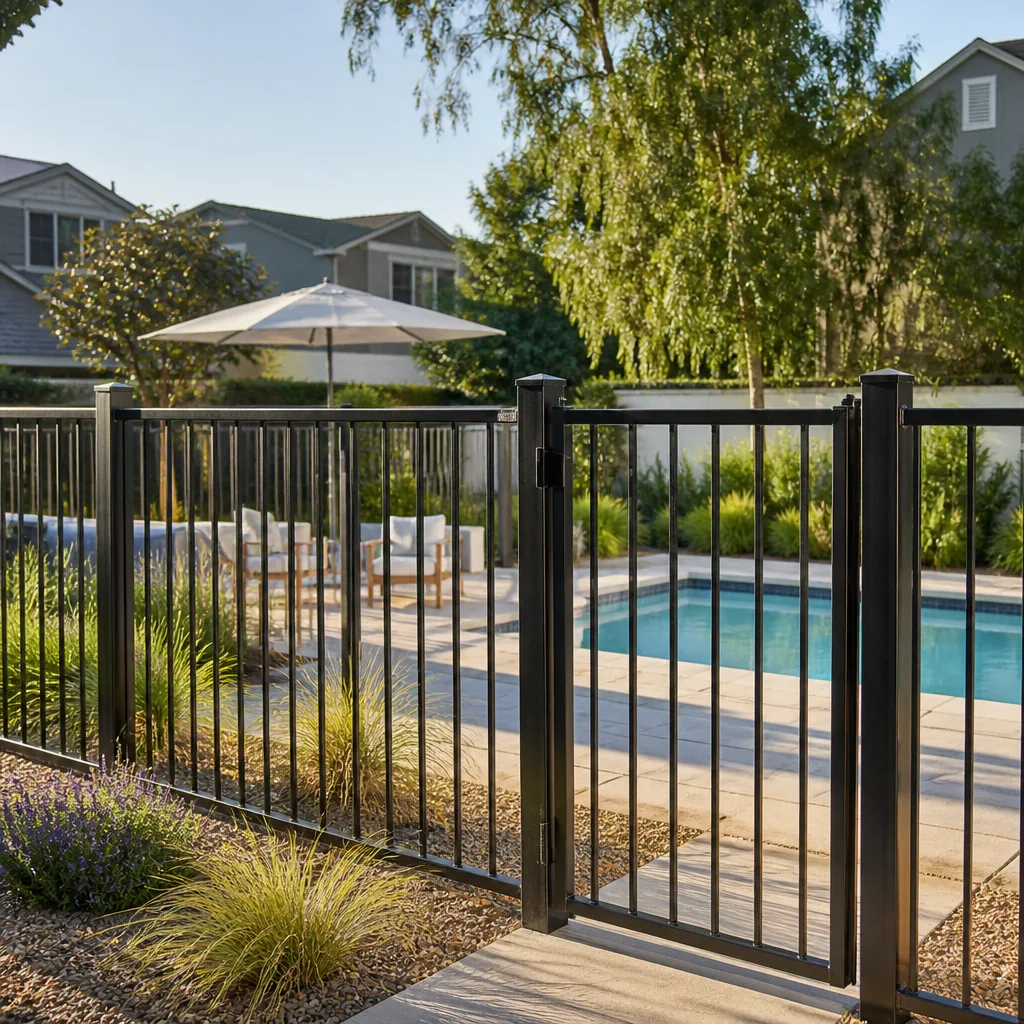
- Fence post re-setting after wind damage. This is where fence installation comes into play at the material-selection stage. Ameristar steel or Master Halco options hold up better to wind load than many standard wood assemblies, and the post footing matters as much as the panel.
- Window or door replacement for failed seals and draft entry points.
If you’re also planning a larger project, such as a home additions & ADU scope, the new structure provides an opportunity to upgrade structural elements and consolidation below the main house. That falls into the category of work best planned when the schedule is clear.
Insurance Documentation Prep
Insurance claims after an emergency are won or lost on pre-event evidence. A carrier evaluating water damage wants to see the home in its pre-storm condition. Without documentation, you can spend weeks reconstructing a case in the middle of a crisis. An annual photo and record habit fixes this in about 30 minutes a year.
Here’s the routine we recommend to Mission Viejo homeowners:
- Photograph exterior elevations from all four sides each year. Repeat from the same vantage points each time so a before-and-after comparison is direct.
- Photograph the roofline, gutters, and fascia. Include detail shots of flashing, vent boots, and penetrations.
- Photograph interior areas of water exposure: under each window, each plumbing chase, and the wall-ceiling junctions in every room.
- Note the date on every image. Most smartphone cameras embed this automatically, so keep the original files.
- Keep receipts for roofing, windows, and exterior work. Documented improvements support a replacement value claim.
- Photograph the perimeter drainage in dry weather. A clear swale in June is evidence that the November flooding was a storm event, not long-term neglect.
Store this as a single annual folder, preferably in the cloud. If you’re working with us on a scheduled project, the written estimate and completion documentation become part of the record. The written estimate is also what sets the final price on every job, so both sides know the scope exactly before work begins.
What Belongs on a Contractor’s Schedule vs. Yours
The single biggest source of post-event damage is work that got scheduled too late. A roofing repair booked for October can’t fix a flashing gap that was already leaking in February. A non-combustible fascia upgrade scheduled after fire season starts is on the correct timeline only if the calendar hasn’t already closed. Mapping the work to the right season makes the difference.
- Schedule in spring, before fire season: vent upgrade, fascia and soffit, deck surface, roof inspection and any flashing repairs.
- Schedule in summer, before storm season: gutter re-hang, downspout corrections, window seal replacement, drainage clearing, and any grading work around the foundation.
- Handle yourself in any season, after a rain: visual perimeter walk, interior leak check, and minor cleanout.
Because Mission Viejo work spans seven categories under one contractor, the exterior items fit into a coordinated schedule. Roofing, windows and doors, exterior fencing, and hardscape all get updated on the same calendar, by the same point of accountability, with materials you choose from a documented roster of 50+ manufacturer brands. When the seven-line scope lives with one contractor, the envelope gets treated as an envelope rather than as four unrelated projects.
Common Mistakes to Avoid
- Waiting until the storm is forecast. A roof, gutter, or drainage repair bookable in October can’t be squeezed into the week before rain hits. The window is spring and summer, not the eve of the event.
- Assuming a roof that’s “not leaking” is sound. Water enters at flashing and penetrations days before it appears inside. Pre-emptive inspection catches what the ceiling hasn’t yet shown.
- Skipping the annual photo set. Waiting until damage is present means your claim has no pre-event baseline. A yearly photo folder costs 30 minutes and supports every future claim.
- Choosing fence materials on appearance alone. Wind load capacity belongs in the decision. Steel options from Ameristar and Master Halco handle our wind events differently than many standard wood choices.
- Treating hillside grade as a fixed feature. Settlement, planting, and soil saturation change grade over time. It needs periodic inspection, not a one-and-done.
- Splitting envelope work across multiple trades. When a flashing failure and a gutter failure sit at the same location, separate trades produce separate excuses. One contractor means one party responsible for the outcome.
- Documenting only the big items. The smaller items, from a sill sealant to a downspout connection, are exactly where water intrusion happens. Photograph the details, not just the elevations.
See the difference
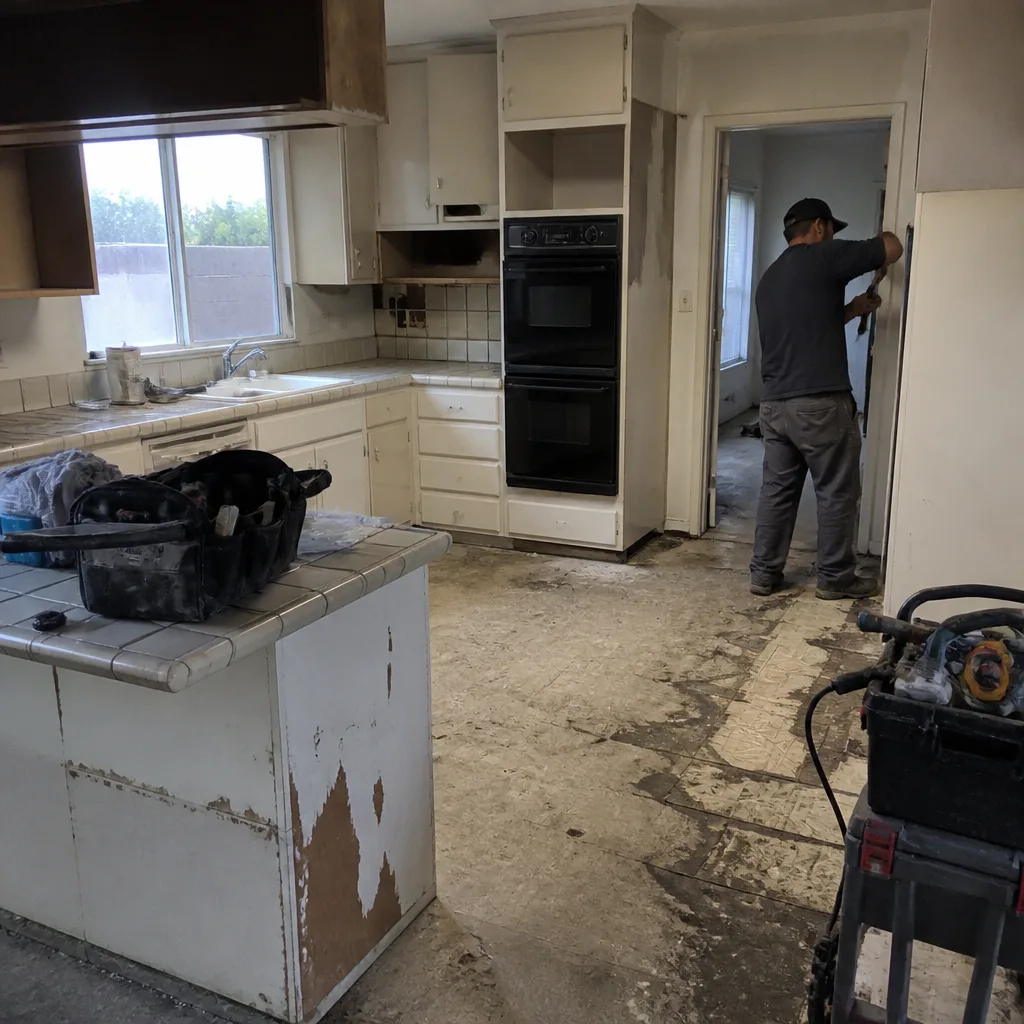 Before
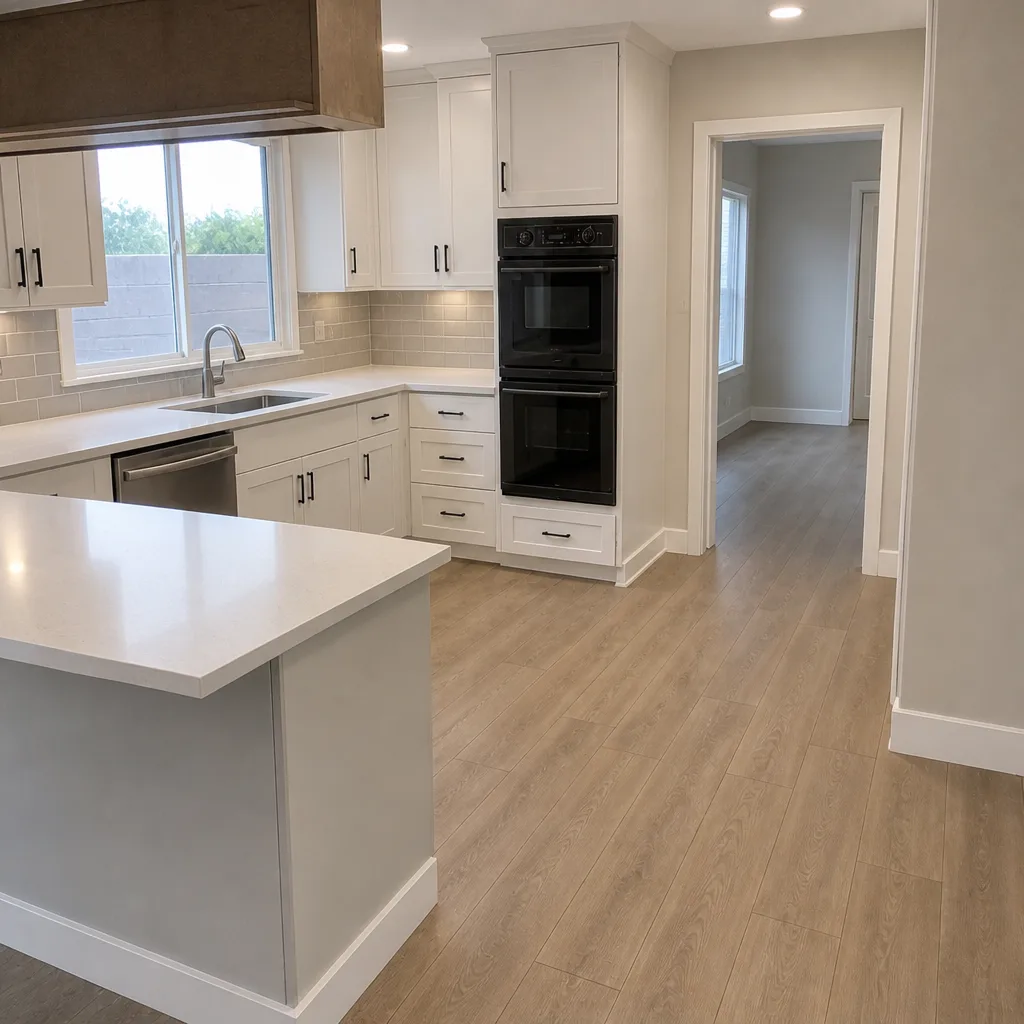 After
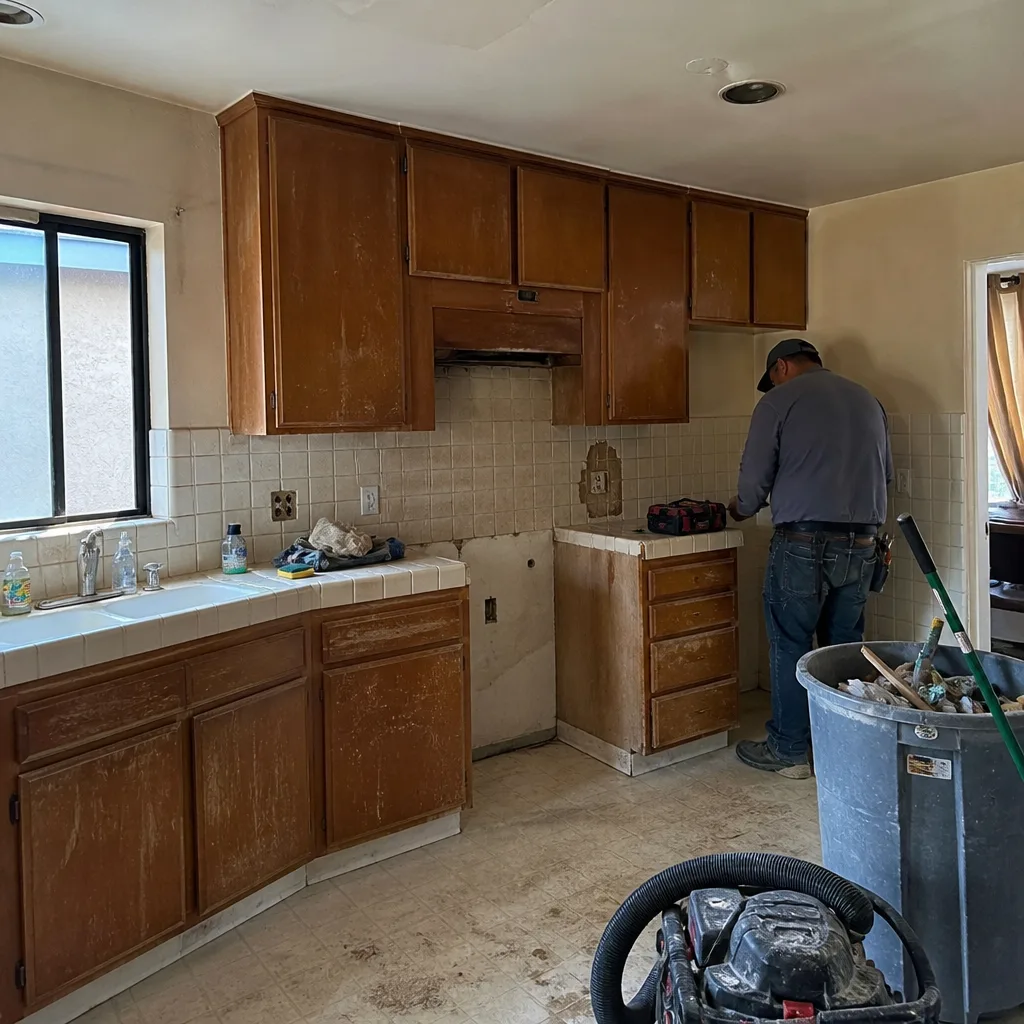 Before
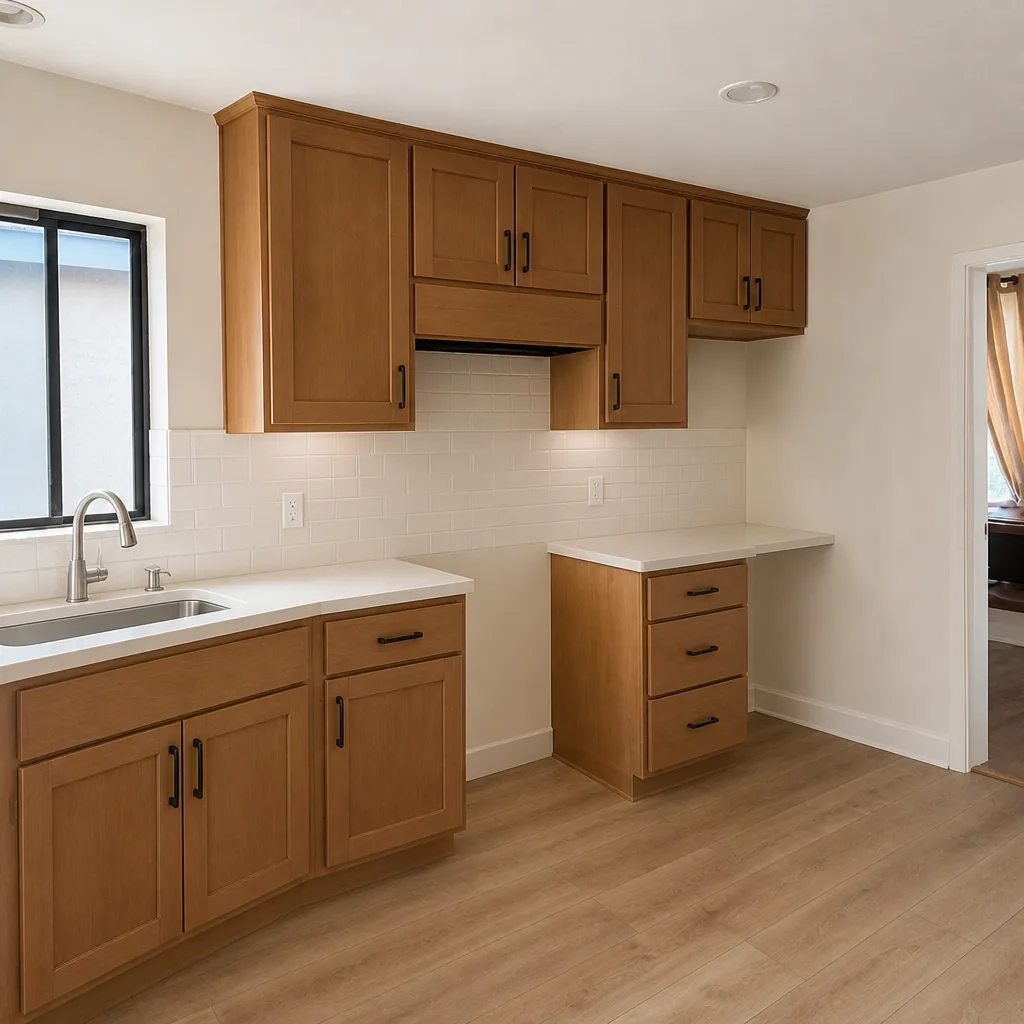 After
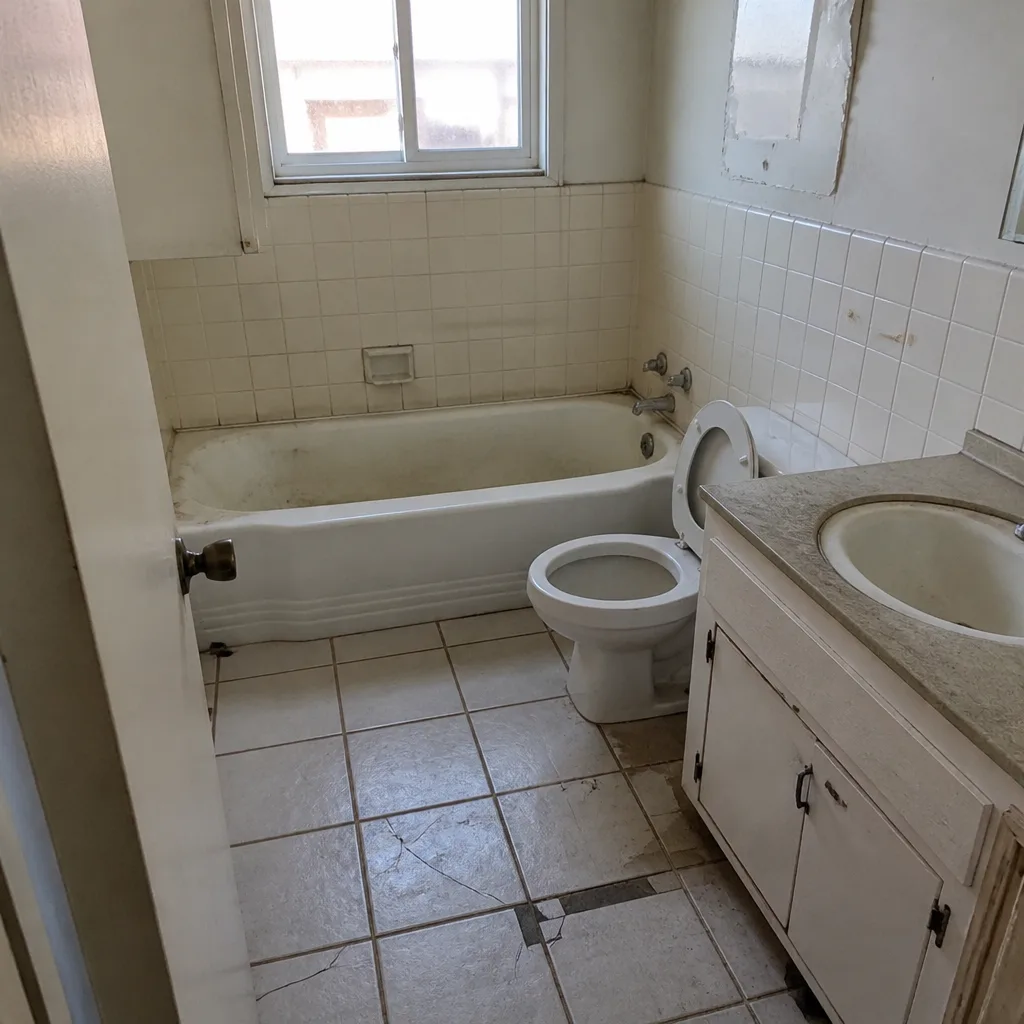 Before
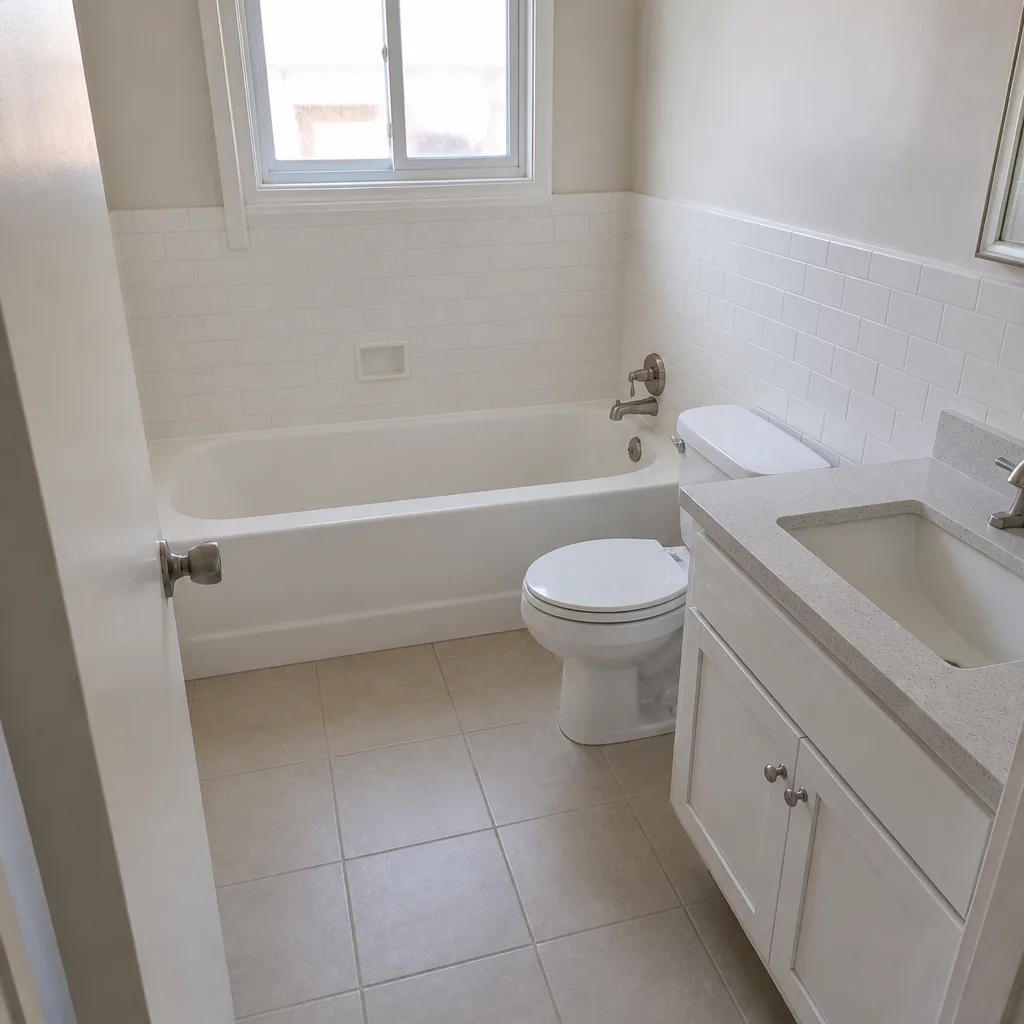 After
When to Call a Professional
Most of the annual work in this guide is yours to run. When it stops being yours is easy to identify: the moment a repair involves the roof plane, the siding, structural framing, or anything inside a wall cavity. If your post-event inspection finds staining on a ceiling, cracks that widened in 48 hours, a foundation perimeter with new movement, or a large gap in fascia attachment, that’s a professional call. Caulking that doesn’t hold after two attempts means the sealant isn’t the problem; the substrate will be. Anything ember-resistance related, from vent replacement upward, is a scheduled contractor job. Construction Mission Viejo offers free estimates in Mission Viejo for all seven categories, coordinated under one contractor from the driveway to the roofline. Call (833) 620-5454 to schedule a walk-through and get a written, line-item estimate.
Frequently Asked Questions

The single highest-return step is a yearly exterior inspection and photo record: roofline, gutters, fascia, window seals, and perimeter drainage, all documented with dates. It establishes a pre-event baseline for insurance and surfaces the small failures before they become intrusion points. That one habit does more than any single repair. Call (833) 620-5454 for an exact quote – estimates are free.
We don’t quote emergency response work here because the price is set per job by the written estimate, and the estimate is free. What matters more is that scheduled preventive work is substantially cheaper than post-event repair of water intrusion, which often extends into framing, drywall, and finishes. Call (833) 620-5454 to schedule a free estimate and get the actual line-item scope for your home.
If your property sits near the wildland interface, ember-resistant venting is a high-value upgrade and is the top exterior-hardening item on our list. CAL FIRE guidelines point to ember-resistant venting at the 1/8-inch screening standard as the practical baseline. Homes more than a few blocks inside the urban area can weigh the priority differently. Call (833) 620-5454 to discuss your property location and the options available.
No. The written line-item estimate sets the final price, and we quote fixed scopes with no change orders on our scheduled work. If inspection during the project reveals a condition that wasn’t visible at estimating, we document it and you approve any revision before work continues. The point of a line-item quote is that both sides know the scope before the first nail goes in. Call (833) 620-5454 to schedule your estimate.
Yes. Permitted, code-compliant work is the standard on any structural scope, and additions and ADU projects require full general contractor standing. That covers design coordination, structural permits, and inspection sign-offs. If your post-event inspection turns up framing or foundation movement, that’s permitted work, not patch repair. Call (833) 620-5454 to schedule the estimate and permit review.
It depends on scope. A flashing repair or gutter re-hang can be a short job; a fascia and vent upgrade runs longer; storm-related structural work runs longer still once inspection reveals the full extent. The written estimate includes the expected timeline for your specific scope, which is the only honest answer for a home we haven’t inspected. Call (833) 620-5454 to schedule the estimate and get the schedule in writing.
The Bottom Line
Preparedness for a Mission Viejo home comes down to a handful of habits: a yearly photo record, a spring and summer schedule for exterior work, and a post-event inspection that knows exactly where to look. Wildfire interface, liquefaction-adjacent soil, and atmospheric river events are the local conditions. Small, deferred maintenance is what converts them into property damage. Construction Mission Viejo handles the scheduled portion of that list under one contractor from the driveway to the roofline, with material options across a documented roster of 50+ manufacturer brands. We bring the options; you make the call. Call (833) 620-5454 for a free estimate. We answer 24/7. Fast dispatch from 7am to 7pm, Sunday through Friday.
Written by the team at Construction Mission Viejo.