
Last updated November 18, 2026








Free written scope consultation - allowances, timeline, and change-order rules on paper before a single trade is scheduled
Construction Warning Signs: A Mission Viejo Homeowner’s Reference Guide
Most warning-sign guides tell you to watch for foundation cracks, roof leaks, and sagging fences. The trouble is, by the time the average Mission Viejo homeowner notices those things, they’re already looking at a major project. The hairline crack running diagonally from a window corner, the mortar crumbling under a ridge cap, the paver that settles a quarter inch every dry season – these are the early signals that matter, and they’re easy to dismiss because they don’t look urgent. In Mission Viejo, the soil, the housing stock, and the long dry summers each shape which warning signs show up and what they actually mean. This guide walks through the indicators worth catching now, when they’re still small.
Quick Answer
In Mission Viejo, the construction warning signs worth catching early are diagonal and stair-step cracks wider than a quarter inch, roof ridge caps that lift or lose mortar, water staining around window frames and sliding door thresholds, driveway pavers that rock or pond water, and retaining walls that begin to lean or weep water from the wrong spots. Each of these signals a developing problem in the building envelope, the foundation soil, or the hardscape before it turns into visible failure – which is the difference between a modest repair and a much larger remediation.
Styles & brands we work with
- Kitchen remodeling
- Bathroom remodeling
- Home additions & ADU
- Roofing
- Windows & doors
- Driveway & pavers
- Fence
Table of Contents
- Why Mission Viejo Homes Show Warning Signs Differently
- Cosmetic Stucco Cracking vs. Structural Cracking
- Roof Warning Signs on Tile Roofs
- Driveway and Hardscape Failure Signals
- Water Intrusion Around Windows and Doors
- Retaining Walls on Hillside Lots
- How to Read the Signs Under Your Specific Roof
- Common Mistakes to Avoid
Why Mission Viejo Homes Show Warning Signs Differently
A large share of Mission Viejo homes sit on expansive clay soils – the kind that swell when wet and shrink when dry. That single fact drives most of the warning signs in this guide. When clay expands, it pushes against foundations, retaining walls, and slab edges. When it contracts through a long dry season, soil pulls away and the ground shifts unevenly. Structures built on clay soil rarely fail all at once. They move a fraction of an inch at a time, and the evidence shows up in cracks, misaligned doors, and settling concrete long before anything dramatic happens.
The construction era of a neighborhood matters nearly as much. Homes built in the 1970s through the 1990s tend to have concrete tile roofs on wood framing, stucco exteriors over plywood or OSB sheathing, and cast-in-place retaining walls along the hillside lots that make up much of the town. Newer builds in the master-planned neighborhoods near Lake Mission Viejo may use different flashing methods and drainage design, but the underlying forces – expansive soil, summer sun, occasional winter storms – haven’t changed.
Because of that, the warning signs worth watching here aren’t the same ones you’d watch for in a wetter climate. Instead, the early indicators cluster into five categories:
- Foundation and soil movement, showing up as diagonal or stair-step cracks
- Roof system aging on tile assemblies, especially at ridge caps and flashings
- Hardscape movement where the sub-base has settled unevenly
- Water intrusion at window and door transitions through the stucco
- Retaining wall lean, block separation, and drainage outlet conditions
Each of the sections below takes one of these categories and walks through what to look for, how to tell early from advanced, and when it’s worth calling in a professional. None of it is complicated once you know what to look at.
Cosmetic Stucco Cracking vs. Structural Cracking: How to Tell Them Apart
Stucco cracks are the most-misread warning signs on a California home. Some are cosmetic – the stucco coat shrinks as it cures, and small cracks are normal. Others are the visible tip of a foundation problem underneath. The good news is that crack width, direction, and location give you clear criteria for telling them apart.
Here’s how to evaluate a crack without guessing:
- Measure the width. Hairline cracks under 1/16 inch are almost always cosmetic and belong to normal stucco movement. Cracks between 1/16 inch and 1/8 inch are borderline and worth monitoring over several months. Cracks wider than 1/8 inch, and especially those wider than 1/4 inch, deserve inspection.
- Note the direction. Vertical cracks that follow a seam or the corner of a window are usually cosmetic or thermal. Diagonal cracks, especially those running from the corner of a window or door toward the ceiling or floor, are often signs of differential settlement or frame distortion. Stair-step cracks that follow a mortar joint in a masonry wall point to horizontal movement – often soil-related.
- Watch the timeline. A crack that appeared once and hasn’t changed in five years is different from one that reopened after a repair or has visibly widened between seasons. Take a dated photo now, and take another in six months. That comparison tells you what a single inspection can’t.
- Check the interior mirror side. If a crack on the exterior of a wall corresponds to a matching crack on the interior drywall, the movement is going through the whole wall, not just the plaster. That’s a stronger signal than an exterior-only crack.
- Look at doors and windows near the crack. If they stick where they used to close smoothly, the frame may be out of square, which often indicates settlement.
In Mission Viejo, homes on the older clay-soil lots near the center of the city are the most common source of these structural-pattern cracks. The soil moves more aggressively here than on the granite-derived soils further inland, and long dry seasons bring the soil down hard. A quarter-inch diagonal crack isn’t a panic moment, but it is a “get an evaluation” moment, because the cost of catching it now and the cost of catching it after a plumbing or foundation issue develops are very different.
Roof Warning Signs Specific to Tile Roofs
Concrete and clay tile roofs are the norm across Mission Viejo, and they age very differently from asphalt shingles. The tiles themselves tolerate decades of sun. The materials holding them in place – the underlayment, the mortar, and the flashings – do not. That gap between tile longevity and membrane longevity is where most of the important warning signs live.
The three signs to look at on a tile roof:
- Ridge cap lift. Ridge tiles are the row running along the very top of the roof, held in place by mortar over the two sloping edges. When that mortar begins to crack or the ridge tiles start to lift on one side, wind and rain can drive water underneath. A lifted ridge cap is one of the earliest visible warnings on a tile roof, and it’s worth catching before the next storm season.
- Crumbling or missing mortar. Mortar in a tile assembly has a real lifespan, and over 25 or 30 years it weathers. When the mortar at hips, valleys, or ridge caps begins to powder or fall away, the tiles are no longer held in place properly. A walk around the roofline with binoculars shows this quickly, and it’s worth checking annually.
- Flashing separation. Flashings are the metal strips that seal the roof where it meets a wall, chimney, vent, or skylight. When a flashing pulls away from the wall – often a few millimeters at first – water can enter underneath the tile without showing up as a ceiling stain for months. The visible sign of flashing separation is a gap you can see from a ladder or from a neighboring roof.
Tile roof underlayment typically has a shorter service life than the tiles themselves, and the first signs of a failing underlayment show up at the low-slope areas and around penetrations, not across the main slopes. Interior ceiling stains after a winter storm, granules from the underlayment showing up in gutters, and visible daylight in the attic are all signs that the underlayment layer, not the tile, is the problem.
Roof work is not a do-it-yourself category. Tile is heavy, walking a roof safely takes training, and the underlayment replacement involves lifting and resetting thousands of pounds of material. A trained roofer can walk the surface safely and diagnose what’s happening without breaking tiles or making a small repair into a large one. Whenever you’re evaluating a tile roof, a professional inspection is worth the visit.
If you want a full picture of what replacement or repair involves, our Construction Mission Viejo team can walk the roof with you and talk through both paths in plain English.
Driveway and Hardscape Failure Signals: Sub-Base vs. Surface Wear
The driveway is the most-used surface on any property and also the one most often misunderstood. A paver driveway can look uniformly aged and still be structurally sound. The distinction that matters for both repair approach and cost isn’t how the pavers look – it’s whether the sub-base underneath is still doing its job.
Surface wear on a paver or concrete driveway shows up as:
- Color fading and light surface pitting from sun and traffic
- Joint sand settling out between pavers
- Superficial cracking that doesn’t extend through the slab or into the joint pattern
- Localized small chips at the edges where tires pull in and out
Sub-base failure shows up very differently:
- Rocking pavers. A paver that moves underfoot – or knocks when you walk on it – has lost its bed. That means the sand or aggregate underneath has washed out or compacted unevenly.
- Ponding water. Standing water in the same spot after a rain is a sign the sub-base has settled and no longer drains properly. Water in the wrong place accelerates the next round of failure.
- Depressions and waves. Visible dips or ripples running across a driveway indicate settlement of the base layer, not just the top.
- Joint separation that grows over time. Joints that open seasonally and don’t close are a sign of lateral or vertical movement below the surface.
The distinction matters because repair approach and cost are very different depending on which one you have. Surface wear on a sound driveway can often be addressed with cleaning, re-sanding, and a sealing coat. Sub-base failure usually requires lifting and re-setting at least the affected section. And sub-base failure in Mission Viejo often traces back to expansive soil movement or drainage channeled toward the driveway – the fix isn’t just the pavers, it’s the water management.
On a hardscape project, the options question matters as much as the repair question. Mission Viejo homeowners working with a contractor who carries Belgard, Unilock, or Techo-Bloc have real choices on replacement material, not one vendor’s stock. Our driveway & pavers overview covers what a proper tear-out, sub-base rebuild, and install actually involves.
Water Intrusion Around Windows and Doors in Stucco Homes
Stucco is a very durable exterior in a dry climate, and it’s also fairly forgiving of small cracks. Where it struggles is at transitions – the spots where one material meets another. Windows, sliding doors, and the corners where different wall planes meet are where most water intrusion begins on a Mission Viejo home, and they’re also the spots most inspection checklists skip.
The warning signs worth checking:
- Sliding door thresholds. The track of a sliding exterior door collects water during rain and drives into the frame if the flashing below the threshold has failed. Look for a track that holds standing water after a storm, softness in the adjacent drywall, or a visible gap where the threshold meets the stucco.
- Window frame corners. Stucco can crack at the corner joints of a window frame – the small diagonal crack running from the corner of the frame outward. That crack lets water into the wall cavity behind the stucco. Interior paint bubbling or wallpaper curling near the window corner is the follow-on sign.
- Sill and head transitions. Above a window (the head) and below it (the sill) are two different water paths. A sill with no shed slope will pond water, and a head that was never properly flashed will let water wick into the sheathing.
- Wall-to-wall corners. The inside and outside corners of a stucco home – especially where two different wall surfaces meet – are notorious for missing or improperly installed control joints. Fine vertical cracks there are common and mostly cosmetic. Wider cracks opening in a corner can allow bulk water in.
- Interior symptoms. Stains on the top of interior window trim, paint blisters on the adjacent wall, visible mold on drywall corners, and musty smells when the room is closed all suggest water has been entering for longer than the visible exterior signs suggest.
In Mission Viejo, the long dry season can mask a water intrusion issue for years. It only shows up after a heavy winter storm, and by the time it’s visible, the wood behind the stucco may already be compromised. A quick walk around the exterior after the first rain of the season – checking each threshold, sill, and window corner – catches many of these early.
Resolving water intrusion at these transitions usually involves patching, re-flashing, and re-sealing rather than full stucco replacement. When the repair calls for new windows or doors, working with a contractor who carries PGT, CGI, or Therma-Tru lets you match replacement material to the existing envelope without inventing a new look.
What a Healthy vs. At-Risk Retaining Wall Looks Like on Mission Viejo Hillside Lots
Hillside lots are part of the character of Mission Viejo, and most of them have at least one retaining wall holding back a slope. A retaining wall is a system, not a wall: it depends on drainage, the soil behind it, and the block or poured-in-place structure working together. When one part starts failing, the others follow within a season or two. The warning signs are surprisingly specific once you know what to look at.
A healthy retaining wall shows:
- A consistent vertical face, or a slight backward lean that matches its original design
- Clean, planted joints with no visible separation between block units
- Weep holes (or drainage outlets) that flow freely during and after rain
- Drainage exiting at the base of the wall, not at the middle or top
- Firm, fully vegetated soil at the uphill side, with no visible erosion channels
An at-risk wall shows any of these:
- A lean that has developed since installation, or a lean that increases over months
- Block separation – gaps opening between adjacent block units, or step-staggering at a corner
- Bulging outward at mid-height, which is usually a sign that water pressure behind the wall is not releasing
- Weep holes that are dry (blocked) or that flow with muddy water (soil washing out from behind the wall)
- Soil erosion or sinkholes behind the top of the wall
- A base that has shifted or a footing that appears to sit on soft, wet soil
The rule of thumb for homeowners watching a wall: a small lean or a single block separation per year is a “get it inspected” moment. A lean that grows visibly in a single rainy season, a bulge at mid-height, or muddy water flowing from the drainage outlets is a “stop parking near it and call” moment. Retaining wall failures accelerate quickly once water gets a path behind the wall.
If you’re evaluating major repair or replacement, our fence installation work and structural retaining wall projects share the same foundation and drainage questions, so a single conversation can cover both.
How to Read the Signs Under Your Specific Roof
The warning signs in this guide aren’t a checklist to run against every house. They’re a set of principles you apply to the house you actually own. Three variables shift which signs matter most for you.
Construction era. A home built in the 1980s has a specific set of likely vulnerabilities: original concrete tile roofing with underlayment nearing the end of its life, cast-in-place retaining walls with aging drainage, and aluminum-framed windows with a single line of weather sealing. A home from the 2010s may have the same design details done to newer standards – different failure points, different warning signs.
Lot slope and drainage direction. A flat lot and a hillside lot move in completely different ways. On a level site, expansive clay shows up in the slab and driveway. On a sloped site, it shows up in retaining walls, drainage channels, and steeper stucco transitions. Knowing your property’s slope tells you which sections of this guide to prioritize.
Roof assembly and underlayment age. Concrete tile roofs from different installers use different underlayment products, and those materials have different service lives. If you don’t know the age of the underlayment on your home, that’s the first thing to establish – because the visible warning signs on the tile surface mean very little without knowing how much life is left underneath.
Mission Viejo’s combination of expansive clay soils and long dry summers makes the early-warning approach especially valuable here. A footprint of a foundation crack, a lifted ridge cap, or a soft threshold costs little to address when caught. The same issues caught a year or two later – after a winter storm has pushed water through them – are a very different scope.
One useful practice: pick a date every spring and every fall, and do a slow walk around the property looking for changes. Foundation corners. Window corners. Roof ridge line from the ground. Driveway edge. Retaining wall behind the house. Ten minutes twice a year catches most of what this guide describes.
Common Mistakes to Avoid
- Painting over a stucco crack without diagnosing it. A coat of paint hides the problem, not the cause. If the crack is structural, the paint hides the evidence a professional would use to diagnose it, and the crack reopens within a year.
- Calling a hairline crack a foundation failure. The opposite error is just as costly. A 1/32-inch vertical crack at a window corner is usually cosmetic and doesn’t need a foundation evaluation – it needs a photo and a calendar reminder to check it in six months.
- Replacing a driveway surface without fixing the sub-base. Rolling new pavers or a new slab over failed sub-base simply transfers the same settlement to the new surface. If pavers are rocking, the fix begins below the pavers, not on top of them.
- Covering weep holes with landscaping or mulch. Every spring, homeowners in Mission Viejo stack soil or mulch against a retaining wall to tidy up a bed. That’s the single fastest way to trap water behind the wall – and one of the most common causes of wall failure.
- Assuming a tile roof is fine because the tiles look fine. On a tile roof, the visible surface doesn’t tell you what’s happening at the underlayment, the flashings, or the mortar. That’s why the ridge line and the transition details matter more than the tile color.
- Ignoring interior warning signs because the exterior looks dry. Stains on the top of window trim, paint blisters near door frames, and musty smells in a closed room are the follow-on signs of water that’s already in the wall. There is no “wait and see” for these.
- Hiring a single-trade specialist to diagnose a multi-category problem. A roofer diagnoses a roof, a foundation specialist diagnoses a foundation, and an interior trim guy does not walk a retaining wall. When a house shows signs in more than one category, the diagnosis has to come from someone who can read the whole building envelope.
See the difference
 Before
 After
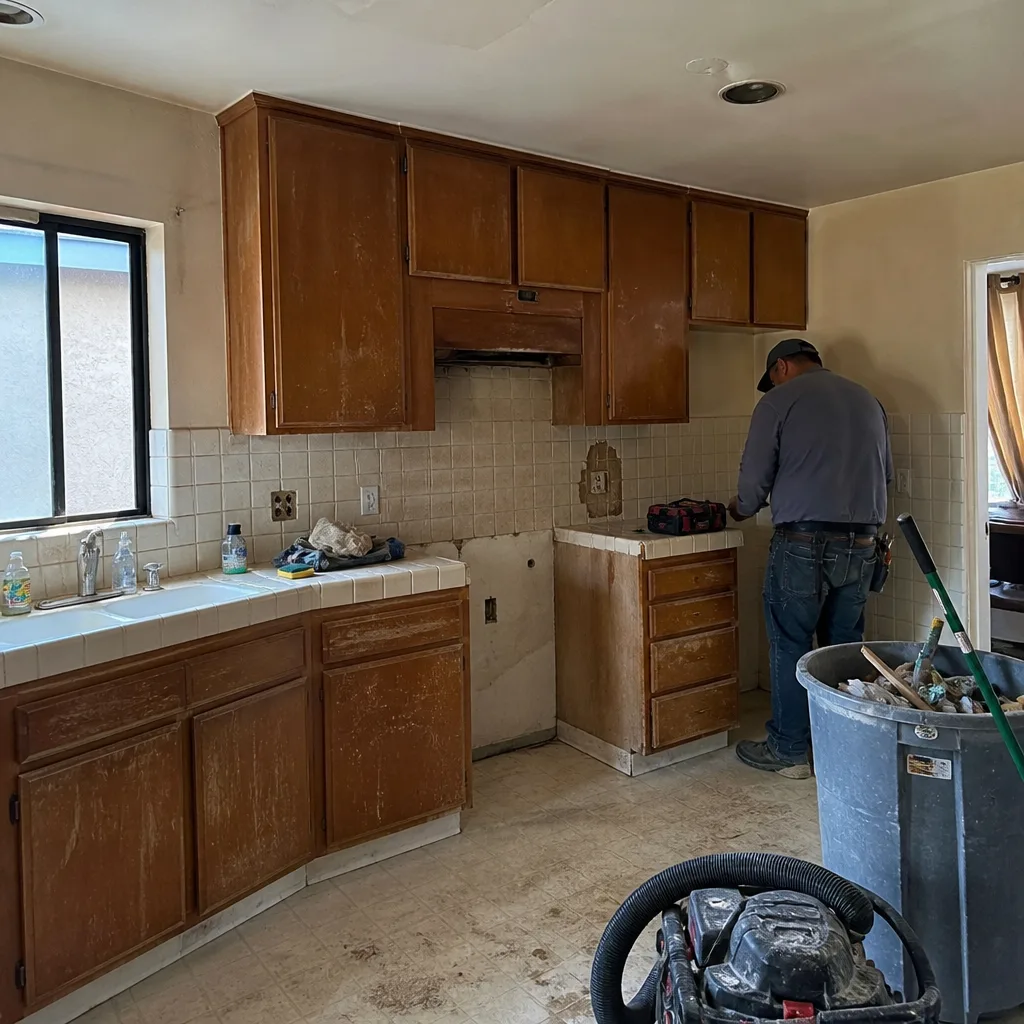 Before
 After
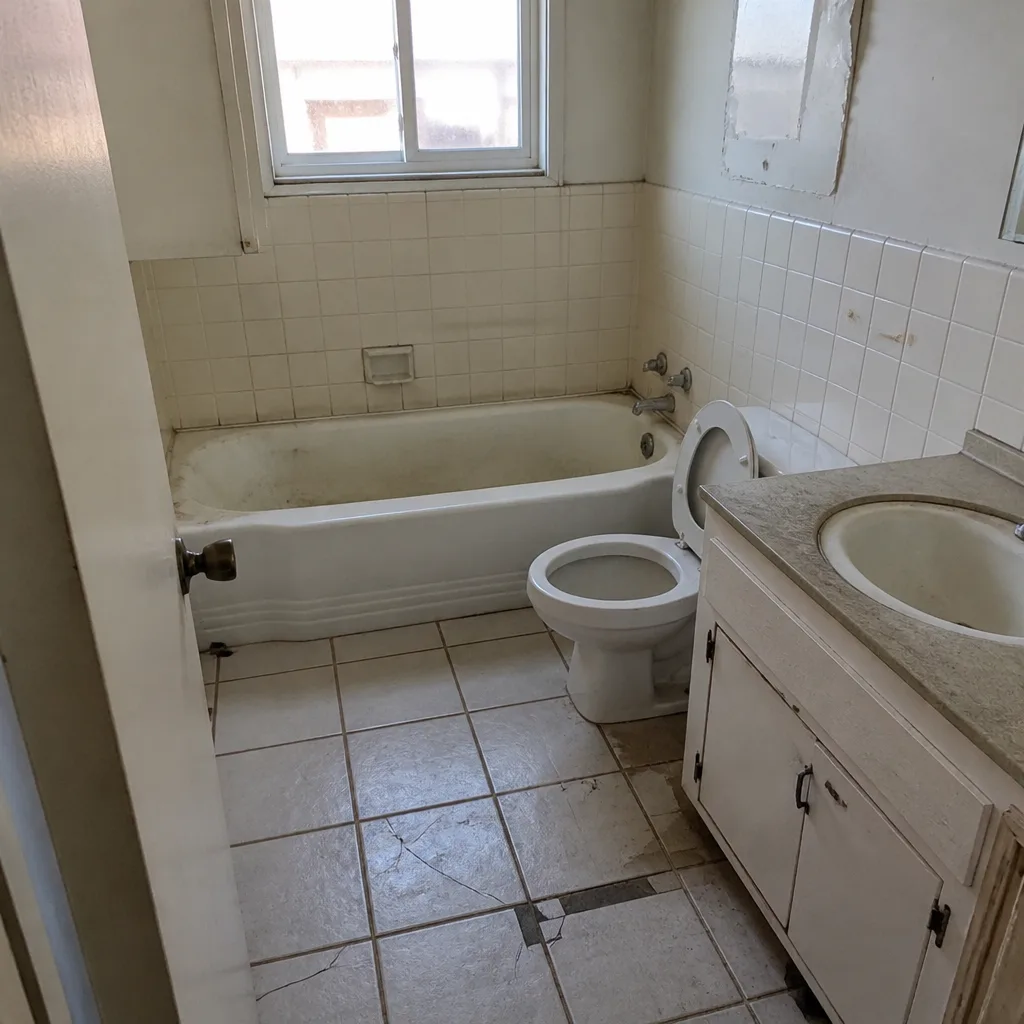 Before
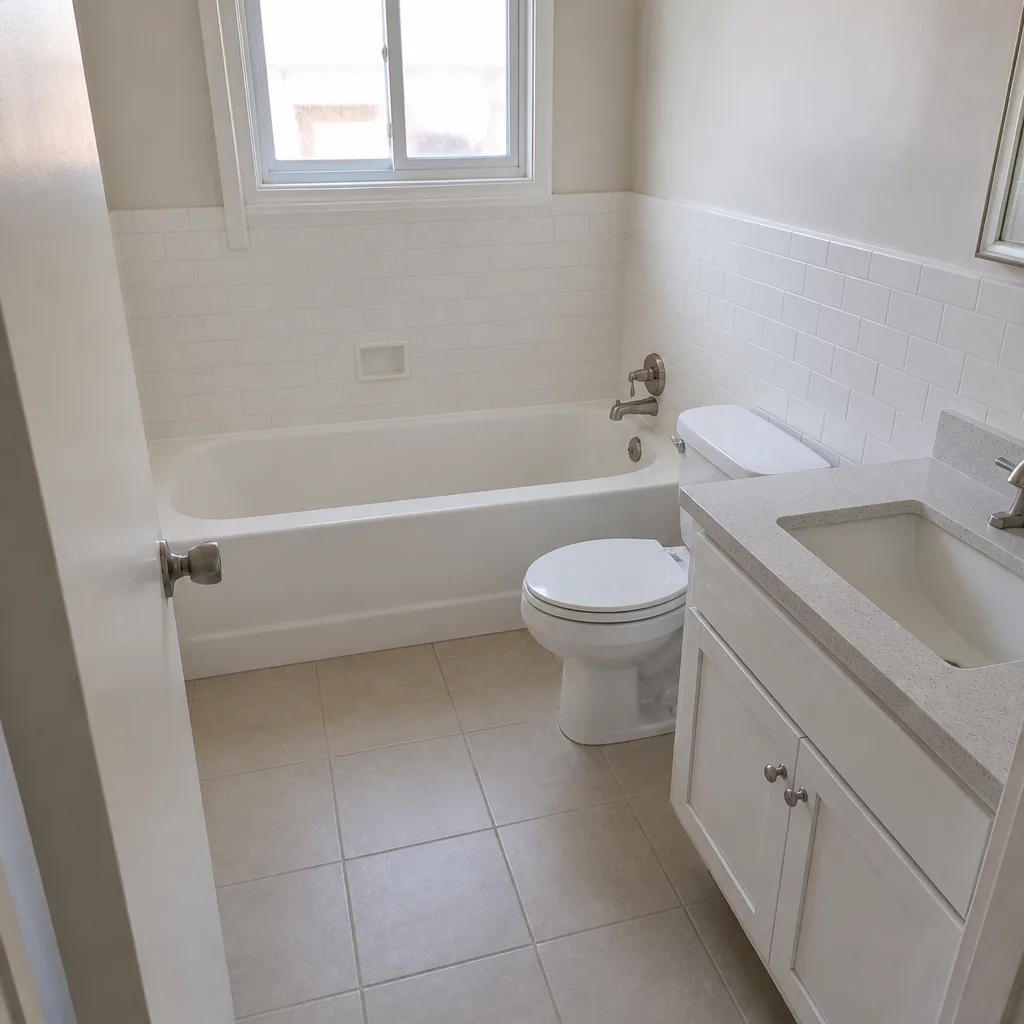 After
When to Call a Professional

There’s a wide middle ground between “check it yourself” and “call now,” and the scenarios below fall solidly into the second camp. Call a professional if you’re seeing: a diagonal or stair-step crack wider than a quarter inch, or any crack that has visibly widened between seasons; a ridge cap that has lifted or lost mortar; a sliding door threshold that holds water or has soft surrounding drywall; pavers that rock underfoot or a driveway that ponds in the same spot after rain; a retaining wall that leans, bulges, or weeps muddy water from its drainage outlets.
You should also call if multiple warning signs are showing in different categories at once. A house showing a diagonal foundation crack, a soft window threshold, and a leaning retaining wall is telling you something connected is going on with soil movement and water management – not three separate problems to be handled by three separate contractors.
Construction Mission Viejo offers free estimates in Mission Viejo – call (833) 620-5454. We answer 24/7.
Frequently Asked Questions
A stucco crack wider than 1/8 inch, especially a diagonal crack running from a window or door corner, is worth a professional look. Hairline cracks under 1/16 inch are usually cosmetic and can be photographed and checked again in six months. The pattern and direction of the crack matter as much as the width – a 1/4-inch vertical crack along a seam is often less concerning than a 1/8-inch diagonal crack running toward a corner. If you’re not sure which you have, call (833) 620-5454 for a free estimate; a professional walk-through is the fastest way to know.
Yes – concrete tile roof underlayment has a limited service life, and it fails long before the tiles themselves show visible wear. If your neighbor’s underlayment on a similar construction-era home has failed, yours is likely on the same timeline. The inspection is cheap; the remediation after a winter leak is not. Call (833) 620-5454 to schedule a roof inspection.
If the pavers are color-faded and the joints need re-sanding but the surface is firm and drains properly, it’s surface wear. If pavers rock underfoot, joints open and don’t close, or water ponds in the same spot after every rain, the sub-base has failed and needs to be repaired underneath. In Mission Viejo, sub-base failure often traces back to expansive clay soil movement, so the repair usually involves both the pavers and water management around the driveway. Call (833) 620-5454 for a free estimate.
A healthy retaining wall has a consistent vertical face (or a slight designed lean), clean block joints, weep holes that flow freely during rain, and drainage that exits low on the wall rather than at mid-height. The at-risk signs are lean that changes over months, block separation, a mid-height bulge, or weep holes that flow muddy water. A wall that shows any of those signs is worth a professional look. Call (833) 620-5454 for a free estimate.
Sliding door thresholds, window frame corners, sills, and wall-to-wall corners are the most common leak points on a stucco home in Mission Viejo. These are the transitions where different materials meet, and where missing flashing or a small crack lets water into the wall cavity without showing up on the exterior. Interior paint bubbling, drywall stains, or musty smells in a closed room are the follow-on signs. Call (833) 620-5454 for a free evaluation.
Yes – and it’s usually the better approach when a house shows signs in more than one category. At Construction Mission Viejo, we work across the categories these signs fall into, including home additions & ADU work, and we can read the whole building envelope in one visit rather than passing you between single-trade specialists. That matters when foundation movement, water intrusion, and hardscape failure are connected. Call (833) 620-5454 to schedule a free estimate.
The Bottom Line

The warning signs that matter in Mission Viejo aren’t the dramatic failures. They’re the small, specific ones: the diagonal crack from a window corner, the lifted ridge cap on a tile roof, the rocking paver, the soft threshold, the muddy seep from a retaining wall. Each one is cheap to evaluate and comparatively cheap to fix when it’s still small. Each one gets more expensive the longer it’s allowed to sit through another season of expansive clay shrinking and swelling underneath. Walk the property twice a year. Photograph what you find. Call a professional when a sign in this guide matches what you’re seeing. Construction Mission Viejo works across all the categories these warning signs point to – and you get one point of accountability instead of five contractors guessing at each other’s work.
Ready to get an expert set of eyes on your home? Call (833) 620-5454 for a free estimate. We answer 24/7. Fast dispatch from 7am to 7pm, Sunday through Friday.
Written by the team at Construction Mission Viejo.